Some stories arrive quietly. Not with fanfare, but with a simple message from someone who means it.
In my case, that message came on April 15, 2021, from a stranger named Morgan Short. I’d been scrolling through a Facebook group for people affected by head and neck cancer—a diagnosis I had received in July 2020. Recovery was ongoing. Life was trying to feel normal again. My daughters, then 8 and 5, were learning to navigate a new kind of childhood where their dad bore the signs of survival.
Morgan’s post caught my eye. She was looking for families in Georgia, Tennessee, or North Carolina—specifically those with children who had experienced a parent’s cancer diagnosis. I replied, curious but cautious. She messaged back quickly, introducing herself as a coordinator with Camp Kesem.
Camp Kesem is a nonprofit organization that supports children ages 6–18 whose parents have been diagnosed with or passed away from cancer. Through summer camps and year-round connection, Kesem creates a space for healing, laughter, and belonging. What I didn’t know then was that Camp Kesem would become a thread in the fabric of my daughters’ childhood—and of our family’s journey.
The First Doors Open
Morgan was patient with me. We already had a full June planned, and I wasn’t sure if something virtual could truly make an impact. But she followed up. She answered questions. She made the camp feel real, even through a screen. And then, as I thanked her for her kindness, she sent a final message that still resonates: “Of course! Here for you and your family from here on out.”
That was the doorway.
Our First Kesem Summer – Virtual Camp 2021
We joined the Western Carolina University chapter—made up of energetic, compassionate college student volunteers. On April 24, 2021, Camp Kesem hosted a virtual “Friends and Family” Day. Julie joined a little late after participating in the Pinewood Derby with Cub Scouts—but she made it, and it was the beginning of something special.
Our first camp experience was a fully virtual camp week in June 2021. I took time off from my then-job to be part of it. Caroline, at age 5, was too young to participate. But Julie, at age 8, jumped in fully. Despite the screens and the distance, the connection was real. Crafts, stories, silly challenges—it was all a way to say you belong here.
On July 29, 2021—the first anniversary of my cancer surgery—Julie received a Camp Kesem care package. It was filled with reminders of joy, healing, and shared strength. That day, everything felt a little lighter.
Snowman, Wings, Balloon, and Astor
One of Camp Kesem’s signature traditions is that everyone—campers and counselors alike—gets a “camp name.” It’s whimsical and sacred all at once.
Julie became Snowman. Caroline, when she joined later, chose Balloon. Morgan was known as Wings. One of Caroline’s favorite counselors, full of light and fun, was called Astor.
Names like these create a special language at camp—a space where real names can wait outside, and joy takes center stage. Watching my daughters become Snowman and Balloon meant watching them come alive in a space built just for them.
From Screens to Pines
In April 2022, Camp Kesem held its first in-person “Friends and Family” Day in Asheville, North Carolina. We were able to attend, and the transition from virtual hugs to real ones felt incredible. Hugs replaced emojis. Crafts became real. Counselors became familiar faces. It also snowed.
We learned that Julie was the very first camper registered for the Western Carolina chapter—a quiet milestone that felt like a wink from the universe.
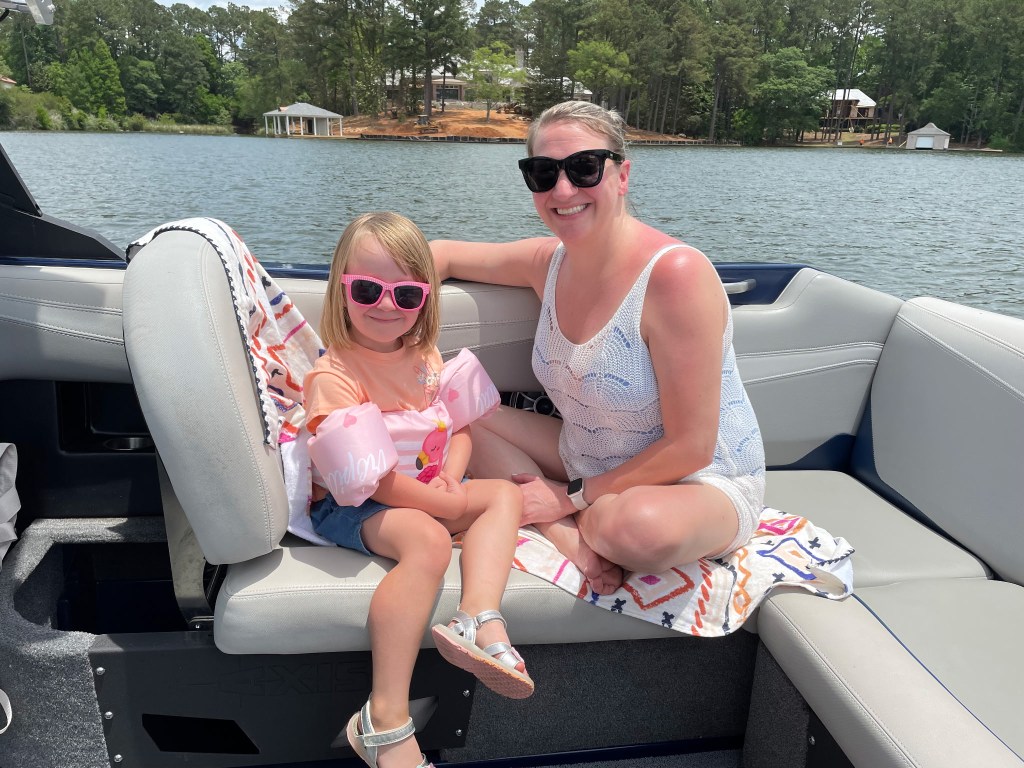
In August 2022, the camp finally moved to a full in-person week. The girls laughed, hiked, sang, and built friendships in the North Carolina woods. Since then, Julie has attended four times. Caroline has gone three. In only a few days, they’ll return once again.
More Than A Camp—A Constant
Camp Kesem is more than a place. It’s a presence. One that has helped my daughters name their experience, connect with others who understand, and find joy in the midst of complexity.
When Morgan said she was “here for us from here on out,” it wasn’t just kindness. It was Kesem itself. The people, the programming, the traditions—they’ve shown up time and again with open arms and silly camp names.
As a cancer survivor and a parent, I can’t overstate what it means to watch my daughters laugh freely in a place designed for their hearts to heal. Camp Kesem gave us a gift—and keeps giving it.
So to Wings, to Astor, to every counselor, volunteer, and chapter—we’re grateful. Truly.
If Camp Kesem’s mission speaks to you, consider supporting their work. Your gift helps children like Snowman and Balloon find joy, healing, and connection through and beyond a parent’s cancer. Camp Kesem has had a profound impact on our family. Every donation helps create more magic for families like ours. If you decide to donate, immediately above the “Your Information” section, you will see a question: “What would you like your donation to support?” The chapter the girls are involved in is “Camp Kesem at Western Carolina.” You may also start typing “Western Carolina” and it will pull up the specific chapter. DONATE
Growing up, my sister and I had the typical brother-sister relationship. We didn’t always get along—arguments, teasing, and plenty of slammed doors—but behind all that was something quietly enduring. Over time, what felt ordinary became extraordinary. And today, I find myself deeply grateful for the relationship we’ve built.
She was there for me during my toughest chapter—when cancer changed everything in 2020. After surgery, I couldn’t eat solid or warm meals, and recovery happened at my mom’s house in Georgia. It was the height of COVID, and everything felt fragile. But my sister came through. She showed up nearly every day, mask on, arms full—not just with supplies that were hard to find, but with thoughtfulness, care, and a quiet kind of strength. She didn’t ask what I needed. She just knew.
Our mom was also by my side through it all. Steady, patient, and selfless. She sacrificed sleep, time, and comfort to make sure I had a safe place to heal. The two of them—my mom and my sister—became this circle of care around me. I’ll never forget how much they carried during that time.
Now, I get to watch my sister in a different role—one she’s fully leaned into: the super-aunt. She spoils my two daughters in ways that make them so happy. Whether it’s the latest Lululemon crossbody bag, a Stanley Cup in just the right shade, or whatever’s trending with tweens, she always seems to know what’s cool before I do. She brings the fun, the surprises, and a kind of glow that only an aunt can give.
She’s also raised two amazing kids of her own—my nephew James and niece Maggie—and watching her love them fiercely, with a heart that’s both playful and protective, is its own kind of gift.
This birthday, I just want to say thank you.
Thank you for being the sister who didn’t just show up when it was easy—but especially when it was hard. Thank you for loving my girls like they’re your own. Thank you for the memories we share, the ones we’re still making, and the quiet ways you’ve helped hold us all together.
I may not say it enough, but I’m proud to be your older brother. I’m grateful for who you are—not just today, but every day.
We picked up our girls from Columbus on Friday. They’ve been with my mom having summer fun for two weeks. On Saturday, we took a detour home through Eufaula. Saturday’s drive home wasn’t just a route—it was a memory unfolding mile by mile. After lunch with Jennifer’s family in Eufaula, we chose Highway 431 instead of the usual path to Ringgold. That stretch from Seale to Anniston, winding through rural Alabama towns like Seale, Crawford, Opelika, Lafayette, Roanoke, Munford, and Centre, felt like traveling through time. In Centre, near Lake Weiss, we turned back towards north Georgia.
We even detoured near Anniston to show my daughters Camp Mac—a place that once held my summers as a camper and later as a counselor. Though the camp was prepping for its final 10-Day Term of the summer, and we didn’t stop officially, the roads and signage whispered old stories. My nephew James, now a counselor himself, carries that legacy forward.
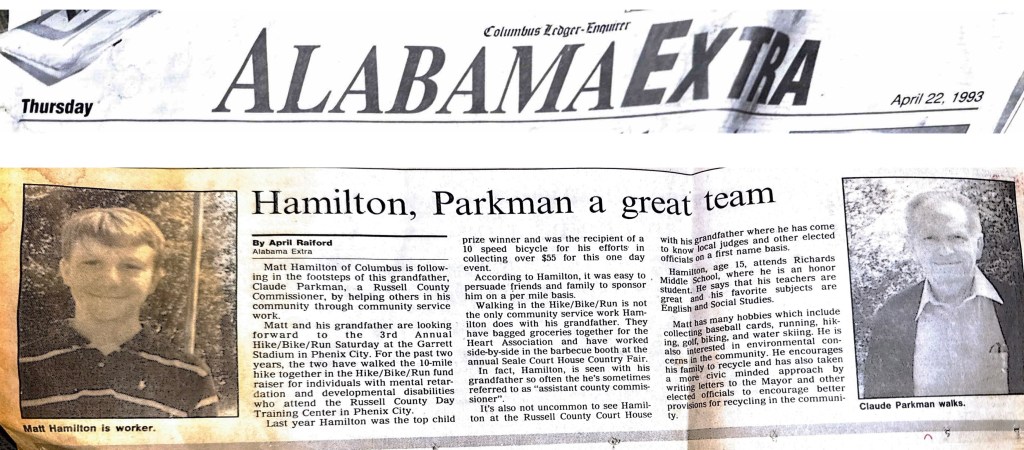
But what stirred my heart most on that drive was passing through Russell County—especially near Seale and Crawford, where my grandparents’ farm stood just off Highway 169. Growing up, that stretch of land was my second home. And my grandfather, a farmer and county commissioner for 24 years, was my compass.
He taught me how to drive—starting on dirt roads at age nine. And even after I earned my license, he still corrected my driving with steady commentary from the front passenger seat. Not so much a backseat driver, but always present, always teaching.
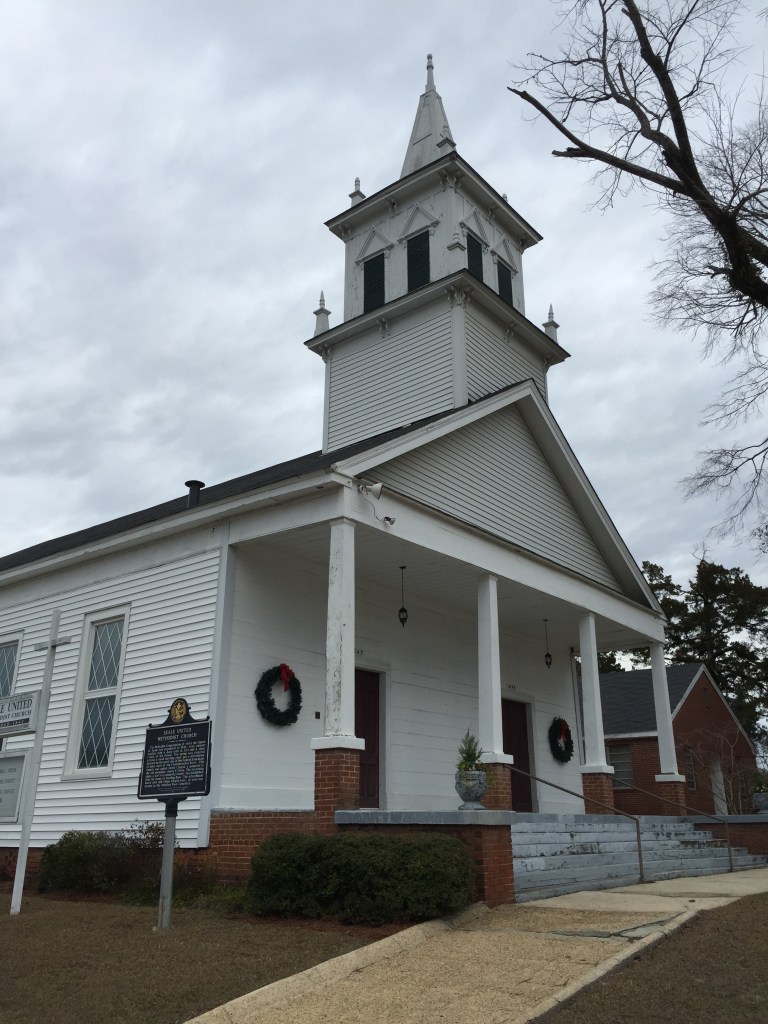
On Sundays, we attended Seale United Methodist Church together. A congregation of 20 or 25 on a good day. Most Sundays, I was the only youth—or one of two or three. Yet it felt whole. Sacred in its simplicity.
He farmed cotton and soybeans when I was young—no animals by then, but plenty of work. I remember riding atop the cotton picker, delivering harvests to the cotton gin, and playing in the wagons filled to the brim—always reminded to stay alert so we wouldn’t smother under the weight. Later, when the crops ended, he planted pine trees for future harvest, thinking ahead, always rooted.
There were no electronics in our world back then, but it didn’t matter. We had fun: honest, muddy, imaginative fun. And once a year, he hosted county barbecues at the farm—whole pigs roasted and a family secret recipe for Brunswick stew served to the county workers. During election years, we might have a barbecue as a campaign event, humble and hearty. I can remember even helping him campaign outside the Crawford Volunteer Fire Station and Rainbow Foods (Grocery Store).
I became his driver, too. To the courthouse in Phenix City, to Montgomery, even up Highway 431 to Huntsville for a state county commissioners’ meeting. It was on that same route—now traveled with my wife and daughters—that memories stirred, quiet and bittersweet.
He was born March 9, 1928. I arrived fifty years and six days later. He passed in May 2004, just two months after Jennifer and I got married. He never got to meet our girls, which still aches. They won’t ride cotton wagons. They won’t sit beside him at the tiny church pew in Seale. They won’t hear his voice from the passenger seat reminding them when to brake.
But they carry him anyway. In my stories, in stories shared by my mom. In the routes I choose. In the grit and grace he taught me.
In Memory:
This story is dedicated to my grandfather, Claude Parkman, Russell County Commissioner from 1972 to 1996, farmer, mentor, and passenger-seat coach. He taught me how to drive, how to campaign, and how to listen to the land.
Though he never met his great-granddaughters, I carry him with me every time we pass through Seale, turn onto Highway 169, or find ourselves drifting down the same stretch of 431 we once rode together. His story lives on in the roads we travel, the work we do, and the family we build.
An article from April 1993 in the “Alabama Extra” section of the Columbus, GA newspaper.
Seale United Methodist Church. I took this picture in December, 2014.
On March 27, 2025, Jennifer and I celebrated our 21st wedding anniversary. It’s a milestone that, on paper, looks neat and round. But in the rearview mirror, it’s a winding road full of real-life moments—some joyful, some impossible, all meaningful.
Jennifer is not one for loud celebrations. Her strength lives in consistency, in quiet acts of love, and in showing up. And for more than two decades, she has done just that—not only for me, but for our daughters, our family, and countless others through her work.
We first met back in June 2002, thanks to a shared friendship between her aunt and my mom. Jennifer had just graduated from the University of Alabama at Birmingham, and I had just finished at Georgia Southern. Her family was visiting her aunt in Columbus, Georgia—who, by coincidence, had been the librarian at my high school. She always thought Jennifer and I should meet.
That meeting happened over Mexican food and Uno cards. From there, a long-distance friendship grew into a relationship. Our first official date was on her birthday—November 4, 2002—a concert in Birmingham with Third Day, Michael W. Smith, and Max Lucado. A year later, on a beach in Panama City near sunset, I asked her to marry me.
Since then, life has brought us so many changes. In November 2012, we welcomed our first daughter, and in August 2016, our second. In 2020, life took a hard turn when I was diagnosed with cancer right in the heart of the COVID-19 pandemic. Hospital restrictions kept Jennifer from staying close, but she and my mom found a hotel near Emory. When I was discharged on August 6, she returned with the girls and took on single parenting for three months while I recovered and completed radiation. That time was hard—but she remained unwavering.
She has driven me home from many appointments, sat through procedures, and stood beside me through anesthesia and uncertainty. Today, July 9, 2025, she was once again there—my driver and companion—as I had my feeding tube replaced at Emory Midtown. They didn’t end up giving twilight anesthesia, but they might have, and she was ready either way. That’s Jennifer: prepared, present, unshaken.
And she’s done all this while pursuing her own growth. In 2023, she completed her Master’s degree through Simmons University in Boston. She’ll be eligible for her licensure exam in May 2026. She’s worked for the same company for 21 years, starting at Lookout Mountain Community Services (now Bridge Health). Her roles have spanned from Case Management to Director of Housing, and now she’s a Substance Abuse and Mental Health Counselor. For the past two years, while I’ve been back in school earning my own Master’s degree, she has helped carry our household financially.
She’s also my concert companion—and a devoted fan of Keith Urban. We’ve seen him live over 12 times (he’s her celebrity boyfriend, or so she says). And through every show, every hospital visit, every parenting challenge, and all of life’s twists—she’s been steady. She’s been grace.
Behind every story I’ve written, every lesson I’ve prepared, every step I’ve taken—Jennifer has been there. Not in the spotlight, but holding the rope when the waters rose.
This post is for her. For 21 years of grit and gentleness. For the love that holds a family together—sometimes quietly, always fully.
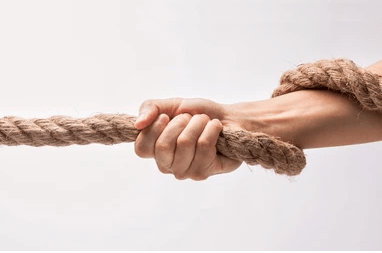
I keep thinking about the rope. The one the girls at Camp Mystic held onto as the river rose around them. A simple rope—meant to guide them across a footbridge—became, in their final moments, a lifeline. A prayer. A thread between this world and the next.
In two weeks, my daughters—ages 12 and 8—will head off to Camp Kesem, held this year at Camp Pisgah near Brevard, North Carolina. It’s a camp for children who’ve had a parent with cancer. A place of healing, laughter, and belonging. Their counselors are college students from the Western Carolina University chapter—young people who give up part of their summer to create joy for kids who’ve known too much sorrow too soon. I’m grateful for it. And I’m uneasy.
Because the girls lost in Texas were the same age as mine. Because last fall, the mountains near Brevard were battered by Hurricane Helene. Because I know, too well, that life doesn’t always give warnings.
I’ve read the headlines. I’ve seen the photos of the Guadalupe River swollen and angry, of parents waiting for news no parent should ever have to hear. I’ve read about the counselors who sang hymns and held hands as the floodwaters came. And I’ve sat with the weight of it all—because it’s impossible not to imagine my daughters in their place.
How could this happen? Why them?
These are the questions that echo in the silence after tragedy. They don’t come with answers. But they come with weight. And maybe, in writing, I’m trying to carry a small piece of that weight with the families who now face a world forever changed.
There’s a kind of sacredness in summer camps. They’re places where kids become a little more themselves—where they sing off-key, stay up too late, and find courage in the dark. Camp is supposed to be safe. It’s supposed to be joy.
And yet, even there, the world breaks in.
I don’t know what to do with that. But I do know this: when I pack my daughters’ bags this year, I’ll do it with a heart full of prayer. I’ll trust the counselors. I’ll trust the weather. I’ll trust the rope.
Because parenting is, in the end, an act of letting go. And faith—real faith—is holding on to love even when the waters rise.
If you feel moved to help in the wake of this tragedy, please give thoughtfully. Sadly, in times of grief, some take advantage of others’ generosity. Be sure to donate through trusted organizations. The American Red Cross has opened shelters and reunification centers in the affected areas, and the Kerr County Flood Relief Fund is providing direct support to families impacted by the flooding.
Surviving cancer, losing a friend, and learning to live with the questions.
I still remember the day my best friend called with the news. He had chronic myeloid leukemia—CML, the doctors said. But they also said it was treatable. Manageable. The kind of cancer you could live with. We clung to that word: treatable. It felt like a promise.
He passed away in 2014. He was 30. I still remember the funeral—how surreal it felt to say goodbye to someone who had so much life left to live. He had been diagnosed a few years earlier, and we all believed he’d beat it. CML was supposed to be manageable. The medications were promising. But for reasons no one could explain, they didn’t work for him. His body didn’t respond the way the textbooks said it should.
He would have turned 41 this past January.
I was diagnosed in 2020, at 42. Stage 4A cancer in my head and neck. The tumor was buried deep at the base of my mouth. The doctor didn’t sugarcoat it—without surgery, I had six to eight months. Even with treatment, the five-year survival rate was less than 50%.
In three months, I’ll reach that five-year mark.
I think about him often. About how our stories diverged. About how I’m still here, and he’s not. And I wonder—not with bitterness, but with reverence—why?
I’ve felt tremendous survivor’s guilt.
Why did God spare me, while taking him? Why am I still here, when others—good people, young people, people with families—are not?
After Danny was diagnosed, we all fought so hard. His medications were staggeringly expensive, and I remember reaching out to a CML foundation, desperate to find help. I ran a Facebook page to keep people updated on his journey. Every post was a prayer in disguise—hope wrapped in words.
On August 25, 2014, I was at his bedside when he took his last breath.
Two years later, almost to the day, my youngest daughter Caroline was born. August 26, 2016. Life arriving in the shadow of death. A reminder that grief and joy often share the same space.
I did a lot for Danny, though I never saw it that way. I would have traded places with him in a heartbeat. After he passed, my wife and I tried to be there for Cassie—his wife, our best friend—and their two boys. His youngest was just eight months old. His oldest, Cade, was six. I’ve tried to be a steady presence in Cade’s life over the years. We even went to a Dave Matthews Band concert together recently. He’s seventeen now. I still see Danny in his eyes.
When I was diagnosed in 2020, the roles reversed. I was the one in need. And God showed up—not in a miracle cure, but in people. Friends mowed our lawn, fixed things around the house, cleaned, donated money. Cancer is expensive, even with insurance. But love showed up in practical ways. In casseroles and yardwork. In prayers and presence.
I was released from the hospital on August 6, 2020. My wife and daughters stayed with Cassie and the boys for a few months while I recovered. That’s the kind of bond we had. Still have.
Cassie remarried in 2021. I was the best man in her and Danny’s wedding. Now, her husband Jared is one of my closest friends. Life is strange like that—grief doesn’t erase love; it reshapes it.
Danny’s life continues to shape mine. In how I show up. In how I listen. In how I love.
I still ask God why.
Why did Danny die at 30, with two boys who needed their dad? Why did the medicine fail him, when it was supposed to work? Why did I survive, when the odds were stacked against me?
I don’t have answers. I’ve stopped pretending I ever will.
But I’ve learned that faith after the fire doesn’t mean never asking the questions. It means asking them anyway—through tears, through silence, through clenched fists—and still choosing to believe that God is near.
I used to think faith was about certainty. Now I think it’s about presence. God didn’t explain Danny’s death to me. But He sat with me in the grief. He didn’t promise I’d survive. But He sent people to carry me when I couldn’t walk on my own.
Faith after the fire is quieter. Less about declarations, more about endurance. It’s the kind of faith that shows up in hospital rooms and funeral homes. In the way Cade still laughs like his dad. In the way that Haddon is now starting to look exactly like his brother and dad. In the way Caroline was born two years after we said goodbye. In the way love keeps showing up, even when the story doesn’t go the way we prayed it would.
I don’t know why God spares some and not others. But I do know this: every breath is a gift. And I want to spend mine loving well, grieving honestly, and living in a way that honors the ones who didn’t get the chance.
Danny’s story didn’t end when he died. It lives on in me. And maybe, in you too.
If you’ve lost someone, if you’ve faced the fire and wondered why you’re still standing—this is for you. Not to give you answers. But to remind you that your questions are holy. That your survival is not a mistake. And that even in the ashes, faith can rise.
In 2020, I was diagnosed with head and neck cancer. What followed was a season marked by pain, distance, and uncertainty—not just for me, but for my wife and our two young daughters. I’ve written about parts of that journey before, but this reflection is different. It’s about what cancer took from me—and what, in its own strange way, it gave back. It’s about fatherhood reshaped by illness, about presence reclaimed through healing, and about the quiet power of showing up. This is a story told through the lens of a calendar—one that once marked surgeries and separation, and now holds birthdays, field trips, and the ordinary days I once feared I’d miss.
The Calendar
It’s a Tuesday morning in May. The kitchen hums with the gentle chaos of routine—Caroline hums to herself as she ties her shoes, and Julie is at the fridge, double-checking her lunch that she takes to school every day. She asks me, “You don’t have anything this week, right?” she asks, not looking up.
I tell her no, just a regular week. She nods, but I can see the tension in her shoulders ease just slightly.
Almost five years later, she still checks. Still worries. Still remembers.
The calendar used to be a battlefield. In 2020, it was filled with dates I couldn’t control—diagnosis, surgery, ICU, radiation. Days I missed birthdays. Days I couldn’t speak. Days I wasn’t there. Now, it’s filled with spelling tests, school holidays, and homework. I follow the same calendar as my daughters do. That wasn’t always the case.
There was a time when I couldn’t be their father in the way I wanted to be. Cancer took that from me. But slowly—through pain, through distance, through healing—it gave something back. Not the same life, but a different one. A quieter one. One where I help with homework and go on field trips. One where I’m not just surviving but really showing up.
School let out on May 23rd. Now, July stretches ahead of us—no appointments, no alarms, no separation. Just time. Time to be together. Time I once wasn’t sure I’d have.
But this week, the house is quiet. The girls are in Columbus, visiting my mom—the same house where I once lay recovering, too weak to speak, too far from the life I knew. Back then, they were the ones far away. Now, they’re there by choice, laughing in the same rooms that once held my silence.
We’ll see them again next weekend. And when we do, I’ll mark it on the calendar—not because I might forget, but because I want to remember. Every visit, every return, every ordinary day we get to share.
The Diagnosis
May 2020 was already strange. The world had shut down, schools were closed, and routines had unraveled. But inside our house, something even more disorienting was happening. I was in pain—deep, unrelenting pain that wrapped around my jaw and neck like a vice. I was tired all the time, sleeping more than I was awake. The girls—Julie, seven, and Caroline, three—tiptoed around me, unsure why Daddy was always lying down, why he winced when he tried to talk.
I tried to keep things normal. I still made jokes when I could. I still tucked them in. But the truth was, I was slipping away from the life I knew, and I didn’t know how to stop it.
By July 7th, I couldn’t work anymore. The pain had taken over. I circled the date on the calendar—my last day at work—and stared at it like it belonged to someone else. A week later, I had my first appointment at Emory. Two weeks after that, I was in the ICU.
I’ve told parts of this story before. But each time I return to it, I see something new—not just in what happened, but in who I was becoming.
The calendar filled up fast. July 27th: admitted to the hospital. July 29th: surgery. July 31st: feeding tube. August 6th: discharged. Each date was a milestone, but none of them felt like progress. They felt like surrender.
Because of COVID, I was alone. My wife and mom stayed in a hotel nearby, but they couldn’t come into the hospital. My daughters were hundreds of miles away, staying with their grandparents. I missed Caroline’s fourth birthday. I missed bedtime stories and backyard games. I missed being their dad.
I remember the blood transfusion. I remember the silence of the ICU. I remember the way the days blurred together, how the calendar on the wall in my hospital room never seemed to move. I was stuck in time, while my daughters kept growing without me.
The Separation
August 6th, 2020. I was discharged from the hospital and sent to my mom’s house in Columbus to recover. My wife and daughters returned to North Georgia. We were all where we needed to be—but not where we wanted to be.
That stretch of time—August to November—was the longest I’d ever been away from my girls. They came down some weekends, but the visits were brief, and the goodbyes were always harder than the hellos. Caroline had just turned four. Julie would turn eight in November. I missed the in-between—the ordinary days that make up a childhood.
I stayed in the guest room at my mom’s house, surrounded by quiet and care. She and my sister made sure I had everything I needed—meals, medicine, encouragement. They watched over me when I couldn’t watch over myself. I’ll never forget that. Their strength held me up when mine was gone.
Still, the days moved slowly. I’d mark the weekends the girls were coming, then count down to them one by one. The calendar became a lifeline—a way to hold onto hope, to remind myself that I was still a father, even from a distance.
COVID made everything harder. No one could visit me in the hospital. No one could sit beside me during radiation. Even when I was out, I couldn’t hold my daughters the way I wanted to. I was fragile. I was healing. I was still learning how to eat again.
And yet, they waited for me. They asked about me. Julie, especially, carried the weight. She was old enough to understand that something was wrong, but too young to make sense of it. Even now, almost five years later, she still asks if I have any appointments. Still watches the calendar for signs of worry.
That fall, while I was in Columbus, the world kept moving. Leaves changed. School started—though not in the usual way. My daughters grew. And I healed, slowly, in the quiet. I missed so much. But I also began to understand what it meant to return—not just to health, but to them.
What Cancer Took
Cancer took more than my health. It took my voice—literally, for a time—and with it, the ease of conversation, the ability to read bedtime stories, to sing in the car, to say “I love you” without effort. It took my appetite, my strength, my ability to eat without a feeding tube. It took my sense of normalcy, my sense of control.
It interrupted my work. I had been at the same job since 2006, and I had to step away in July 2020, unsure if I’d ever return. I was out for five months, and during that time, I didn’t know if I’d be able to go back at all. But I did—slowly, in December. I stayed until February 2023. Still, that stretch of absence felt like a lifetime. The rhythm of work, the identity it gave me, the stability it offered—cancer shook all of it.
But perhaps the hardest thing it took was presence.
I wasn’t there when Caroline turned four. I wasn’t there for the start of school, or for the little moments that make up a day—helping with homework, brushing hair, hearing about a dream right before bed. I wasn’t there to reassure Julie when she was scared. I wasn’t there to hold my wife’s hand when she needed someone to lean on.
It took time. Time I’ll never get back. Time I spent in hospital beds and waiting rooms, in silence and in pain.
It took certainty. Even now, years later, there’s a shadow that follows every checkup, every scan. Julie still asks if I have appointments. She still watches the calendar like it might betray her.
It took simplicity. Things that used to be automatic—eating, speaking, swallowing—became complicated. I had to learn how to live in a body that no longer worked the way it used to.
And it took a version of fatherhood I had imagined for myself—the one where I was always strong, always present, always able to protect.
But in the space left behind, something else began to grow.
What It Gave Back
Cancer stripped away so much—but in its wake, it left space for something else to take root.
It gave me clarity. When everything was uncertain—when I couldn’t eat, couldn’t speak, couldn’t be with my daughters—I realized what mattered most. Not titles. Not routines. But time. Connection. The chance to simply be with the people I love.
It gave me softness. I’ve always been a laid-back father, slow to anger, quick to laugh. But after cancer, I became even more tender. More patient. More aware of how fragile and sacred each moment is. I don’t rush through bedtime anymore. I don’t take silence for granted. I don’t assume there will always be a next time.
It gave me a new path. In 2023, I left the job I’d held for nearly 17 years. I didn’t walk away from work—I walked toward something. I became a paraprofessional at Julie’s elementary school. I was there when she was in third grade, and Caroline was just next door in second. I followed their calendar. I walked the same halls. I saw them at lunch. I was present in a way I never had been before.
It gave me purpose. I started working with students. I saw myself in them—their questions, their fears, their resilience. I went back to school to earn my Master’s in Secondary Education. I began to imagine a future not just for myself, but for the students I might one day teach. A future where my story—my scars—might help someone else feel seen.
It gave me time. Not just more of it, but a new relationship to it. I no longer measure time in deadlines or appointments. I measure it in field trips, in lunchbox notes, in the way Julie still checks the calendar and Caroline still hums in the mornings.
It didn’t give me back the life I had. But it gave me a life I cherish—one built not on certainty, but on presence.
Fatherhood Reimagined
Before cancer, I thought being a good father meant being strong, steady, unshakable. I thought it meant shielding my daughters from pain, from fear, from the messiness of life. But cancer changed that. It showed me that strength isn’t about being unbreakable—it’s about being honest, being present, being willing to show up even when you’re scared.
Julie was old enough to feel the shift. She saw the hospital bags, the weight loss, the silence. She felt the distance. And even now, she carries some of that with her. She watches the calendar. She asks about appointments. She worries more than a child should have to. But she also hugs tighter. She listens more closely. She sings constantly—her voice filling the house with a kind of hope I didn’t know I needed. She knows what it means to care deeply.
Caroline was younger, but she felt it too. She remembers the feeding tube. She remembers the weekends in Columbus. She remembers missing me. And now, she doesn’t take time for granted. She doesn’t sing like her sister, but she laughs—especially when she’s being tickled. Her laughter is full-bodied, contagious, the kind that makes you forget everything else. That joy, that lightness, is its own kind of healing.
I’ve learned that fatherhood isn’t about always having the answers. It’s about being willing to sit with the questions. It’s about letting your children see you as human—hurting, healing, hoping. It’s about showing them that love doesn’t disappear when things fall apart. It holds on. It adapts. It grows.
For a while, I worked at their schools. I was there when Julie was in third and fourth grade, and Caroline was just next door in second. I followed their calendar. I walked the same halls. I saw them at lunch. I was part of their world in a way I never had been before.
That season ended in May 2024. This past school year, I was a substitute teacher at the middle school—Julie’s future school. This fall, she’ll start sixth grade there, and Caroline will begin fourth. I’ll be student teaching, though I don’t yet know where. I may not be at their school anymore. But what I’ve learned—what cancer taught me—is that presence isn’t always about proximity. It’s about intention. It’s about showing up, wherever you are.
Closing Reflection
The calendar still hangs in our kitchen. It’s no longer filled with appointments and procedures. Now it holds birthdays, school breaks, and the occasional field trip. But every time I look at it, I remember the years when time felt like an enemy. Now, it feels like a gift.
The road home wasn’t straight. It was marked by detours, delays, and days I thought I wouldn’t make it. But I did. And I’m still walking it—one day, one page, one moment at a time.
The calendar in our kitchen still reserves space for everyday events—school breaks, birthdays, pediatrician appointments. But when I look at it, I see more than just dates. I see the story it tells. The empty spaces where I once disappeared. The circles marking the girls’ visits to Columbus. The slow return of color, rhythm, and life.
I used to fear the calendar. Now, I’m grateful for it. Not because it promises certainty, but because it reminds me of what I’ve lived through—and what I’ve come back to.
I don’t know where I’ll be placed for student teaching this fall. I don’t know if I’ll be in the same building as Julie, or anywhere near Caroline. But I do know this: I’ll show up. I’ll keep showing up. Because that’s what fatherhood has become for me—not perfection, not protection, but presence.
Cancer took a lot. But it gave me something, too. It gave me a deeper understanding of love. Of time. Of what it means to be a father who listens, who laughs, who lingers a little longer at bedtime.
Julie still checks the calendar. Caroline still bursts into laughter when I tickle her. And I still mark the days—not to count what’s coming, but to honor what’s here.
This year, I’ll be spending the Fourth of July with my wife and our best friends. There may be fireworks. There will be laughter. And there will be a quiet moment—maybe just for me—when I pause and think about what this day really means.
I’ve always loved history. I’m not a teacher yet, but I hope to be. I want to help students see that history isn’t just about dates and battles—it’s about the choices that shape our past. And one of the most important choices in American history happened not on July 4, but on July 2.
That was the day, in 1776, when the Continental Congress voted for independence. John Adams believed July 2 would be remembered as the great American holiday. He imagined future generations celebrating with “pomp and parade… bonfires and illuminations.” He was only off by two days. On July 4, Congress approved the final wording of the Declaration of Independence, and that date became etched into our national memory.
But I keep coming back to July 2. The vote. The decision. The moment we said yes to something bold and unfinished.
The Declaration of Independence is a beautiful document. It speaks of unalienable rights—life, liberty, the pursuit of happiness. It claims that all men are created equal. But from the beginning, those words were more aspiration than reality. Enslaved people remained in chains. Women were excluded. Indigenous nations were erased from the vision of the republic.
One of the most powerful reflections came from Frederick Douglass, who delivered a speech on July 5, 1852, in Rochester, New York, titled “What to the Slave Is the Fourth of July?” Speaking to a crowd gathered by the Rochester Ladies’ Anti-Slavery Society, Douglass honored the courage of the Founders—but then turned to the painful contradiction at the heart of the celebration:
“This Fourth of July is yours, not mine. You may rejoice, I must mourn.”
His words weren’t meant to divide—they were meant to awaken. To remind the nation that liberty, if it is to mean anything, must be for everyone.
This year, I feel this tension more than ever. Because of my past cancer, I can’t enjoy the grilled foods I used to love. My body reminds me every day that freedom—true freedom—is fragile. Yet, I still believe in the promise of this country. I still believe in the power of memory, of reflection, and of choosing hope.
I’m also deeply grateful for those who’ve defended that promise—our veterans, our active-duty service members, and those who serve even when the cost is high. This year, my thoughts are especially with the soldiers who are being asked to leave the military, some unwillingly, not because of their performance or dedication, but because of who they are. Many of them have served with honor, deployed overseas, and led with courage. Their sacrifice, like that of all who wear the uniform, deserves to be remembered.
I know we’re a divided nation. We’ve been divided before. It’s often said—perhaps more myth than math—that only a third of colonists supported independence in 1776. Whether or not that’s accurate, it reminds us that America has always been a nation of debate, disagreement, and difficult choices. The Civil War, the Great Depression, the Civil Rights Movement—each was a reckoning. Each forced us to ask: Who are we? And who do we want to be?
Unity, when it has come, has often been forged in crisis. But what if we didn’t wait for crisis? What if we chose unity—not uniformity, but shared purpose—on ordinary days, too?
What if we remembered July 2 as the day we chose independence, and July 4 as the day we committed to its ideals?
What if we saw this holiday not just as a celebration, but as a challenge?
“We hold these truths to be self-evident…”
Are they? For everyone?
I write this not to lecture, but to wonder. To hope. To remember that democracy isn’t a finished product. It’s a draft. A living document. A promise we keep revising.
This July 4, I’ll be celebrating. I’ll be surrounded by people I love. I’ll be thinking about the stories we tell—and the ones we’re still writing.
Because I love this country enough to ask more of it. And I believe the story of America isn’t over yet.
Did You Know? – The Continental Congress voted for independence on July 2, 1776. – The engrossed copy of the Declaration—the one now in the National Archives—was mainly signed on August 2, 1776. – Three U.S. presidents and Founding Fathers—John Adams, Thomas Jefferson, and James Monroe—died on July 4. – Calvin Coolidge is the only U.S. president born on the Fourth of July.
Your Turn: What does independence mean to you this year? What truths do you still hope we’ll hold as self-evident? I’d love to hear your reflections, feel free to share in the comments or reach out directly.
Sources:
John Adams, letter to Abigail Adams, July 3, 1776. In Adams Family Correspondence, vol. 2, ed. L.H. Butterfield (Harvard University Press, 1963). Read more from the National Archives
Frederick Douglass, What to the Slave Is the Fourth of July?, speech delivered July 5, 1852, Corinthian Hall, Rochester, NY. Text via the National Constitution Center
John Trumbull’s 1819 painting, Declaration of Independence, depicts the five-man drafting committee of the Declaration of Independence presenting their work to the Second Continental Congress.
Some mornings, the heaviness shows up before your feet even find the floor.
It’s not loud. It doesn’t shout. It just settles in beside you, quiet and familiar—like a shadow that doesn’t need to explain itself.
That’s how I’ve felt these past few days. Not overwhelmed. Not panicked. Just… off. Like the soul knows something the rest of me hasn’t caught up to yet.
Yesterday, I got a text from a friend—not someone I’ve met in person, but someone whose story echoes my own. We share the same battle scar: oral cancer. Her journey came first, and mine followed. We were both cared for by the same surgeon, Dr. Kaka—a man with kind eyes and steady hands. He walked us both through fire.
She told me that her latest scan back in April showed a small nodule on her lung. Probably nothing. These things come and go. But still—there it was. That word, nodule, has a way of pressing down on you, even when you know better. I’ve been in that place, too. They found something on my own lung once. It disappeared by the next scan—but not before it quietly rearranged the furniture in my chest.
As I was sitting with that concern, I heard more news—of a woman I once knew from church. Someone who worshiped with us when my best friend, Danny, was pastor. She and her husband eventually moved to South Georgia. They were still on my social feed. We weren’t close, but we were connected—by Sundays, by a meal, by a dozen shared handshakes across time. Yesterday, she lost her life in a car accident. She was 37. A wife. A mother of four kids. Her family had just returned from a mission trip to Honduras.
There’s no good way to hold that kind of loss. No words that feel big enough.
So no, I can’t point to a single thing making this week feel heavy. But the weight is there.
It’s grief. It’s worry. It’s that strange ache that comes from carrying the sorrows of others in your spirit—even when those sorrows aren’t technically yours.
Sometimes grief doesn’t come barreling in. It tiptoes. Layered. Stacked quietly beneath everyday things. You make breakfast. You answer emails. You check the weather. And all the while, you’re carrying the ache of news you didn’t expect, of people you loved in ways that don’t always make sense on paper.
Mental health isn’t always about a crisis. Sometimes it’s just the quiet cost of caring. The emotional hangover that comes from loving people so deeply that their pain leaves an imprint on your day. Even when your scan is clear, it doesn’t mean the fear is gone. Even when the tragedy didn’t land at your door, your spirit still flinches when it hears it knock.
It’s the weight of waiting. Of uncertainty. Of bearing witness to a world that breaks, sometimes beautifully, sometimes cruelly.
If you’ve been feeling this too—if the world feels louder than usual, heavier in your chest—you’re not broken. You’re not “too sensitive.” You’re human. And that humanity is holy.
Today, I’m holding space for my friend. I’m holding space for that family. I’m holding space for the ache that doesn’t need to be justified to be real. And if your heart feels stretched, too—just know: you’re not the only one.
We don’t always need answers. But we do need each other.
If this resonates, I’d be honored if you left a note. We’re all carrying something.
I pulled into the parking space sometime early this morning—drenched, exhausted, and honestly, a little delirious. My ears were still humming from the music, my clothes still damp from the Georgia storm, and the interstate still echoed in my bones. But as I sat there for a beat before cutting the engine, I felt something else too: peace. The kind that only comes after a long, winding journey that somehow lands exactly where it needed to.
The day had started in typical Matt fashion—rushed, overcommitted, a little chaotic, and filled with more love than logistics should allow. I picked up my best friend, then we swung down to Dalton to meet Cade’s friend. Cade isn’t my nephew by blood, but I’ve been Uncle Matt to him since the day he was born. I was there at the hospital, holding him in his first hours on this earth—the son of my best friends, Danny (my brother from another mother) and his bride Cassie, a bond sealed long before either of us had kids in mind. Cade, in true Danny fashion, was on a mission trip and was waiting south of Atlanta. So we took off to go get him.
Danny never made it to see Cade turn 17. Cancer—CML—took him too soon. He and I had always said we’d see Dave Matthews Band together someday. It was a shared soundtrack—the music that got us through long nights, big questions, and road trips that didn’t need a destination. We never got that concert. But last night, I went with Cade—his son—along with Cade’s stepdad—a good man who stepped into big shoes with kindness—and Cade’s buddy. It wasn’t the original plan, but somehow it felt even more right.
Getting there wasn’t easy. Atlanta traffic was Atlanta traffic—on steroids. What should’ve been a few hours turned into a tangled maze of brake lights and exit ramps. After the show, we retraced those same miles in reverse: south to drop off Cade, north again to get everyone else home. Somewhere in there, the heavens opened up.
The rain came sideways—the kind that feels biblical—with lightning cracking the sky like punctuation. As if nature itself had something to say.
And yet… in the middle of all that chaos, we stood under the Georgia sky—soaked, smiling, swaying to a setlist that felt like it had been chosen just for us.
Granted, Cade and I did get into a friendly fuss—he insists Dave Matthews Band isn’t a jam band. I reminded him—with evidence—that some of their live versions could legally qualify as time zones. We agreed to disagree, mostly. Even if some of our favorite songs didn’t make the setlist, it was hard to argue with the ones that did.
I looked over at Cade, tall now and almost grown, and I swear I saw Danny there too. Not in a ghostly way. More like the way Cade sang certain lyrics. The way he laughed at something I said. The way he just was.
Meanwhile, the three people directly in front of us spent most of the show harvesting crops on their phones. Farmville. In 2025. At a Dave Matthews Band concert. I don’t know what they were growing, but I hope it was worth missing “Dive In” or “Captain.” Judging by their sudden attention, the only songs they came for were “Ants Marching” and “Crash Into Me.”
I thought about how much Danny would’ve loved this night. Not just the band, but seeing his son out in the world—living, laughing, feeling joy. I thought about how music carries memory—how certain chords and lyrics can hold grief and gratitude in the same breath.
And maybe that’s what last night really was: a way of keeping a promise I never got to say out loud. A way of saying, “You’re not forgotten. We still carry you—with every song, every laugh, every long drive through thunder and rain.”
It wasn’t easy getting there. It wasn’t convenient. But love rarely is.
Sometimes it looks like five hours of traffic and a tank full of gas. Sometimes it sounds like a guitar riff breaking through the storm. And sometimes—if you’re lucky—it feels like standing in a crowd with a seventeen-year-old boy whose dad should’ve been there… but somehow was.