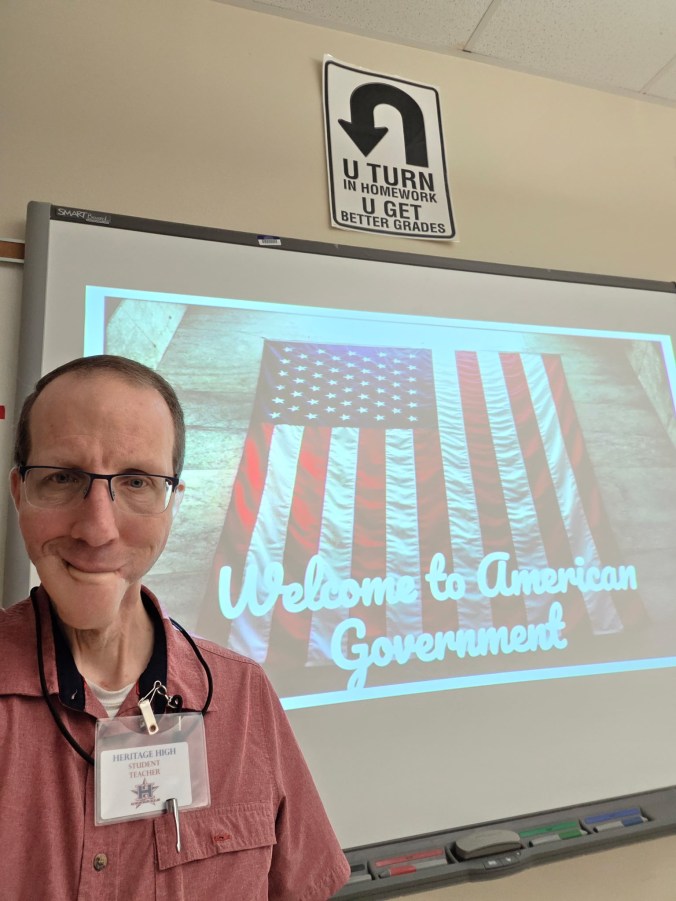
Today is graduation day. At 1:00 PM Eastern (10:00 AM local time), Grand Canyon University will hold its ceremony in Phoenix, Arizona, to honor those completing their degrees—including me. I won’t be there in person. I’ll be in Ringgold, Georgia, still in the classroom, still student teaching, still learning. And honestly, I wouldn’t have it any other way.
This moment marks the completion of my Master’s in Secondary Education—a journey that started on October 19, 2023. Two years ago this Sunday, I took my first steps into graduate school. Two years and one month later, I’m finishing strong with a 96 in my final course as we enter week 11 of 15. My last day of student teaching is November 18, and my final online class concludes the very next day.
It’s difficult to find words for how meaningful this student teaching experience has been. I hit a home run with my mentor teacher—his patience, guidance, and willingness to show me the ropes have made all the difference. Heritage High School has been a perfect fit. The teachers, administrators, and staff have welcomed me with open arms. I’ve felt seen, supported, and encouraged every step of the way. I know I’ll miss it deeply when I finish next month.
When I started this journey, I was working in an elementary school. Last year, I spent a full year substitute teaching at a middle school, and I loved it. I thought maybe middle school was my calling. But a wise principal encouraged me to try high school too—to expand my experience before making a decision. I’m so glad I listened. Now, having taught at both levels, I can honestly say I enjoy working with both age groups. And while the final decision may come down to where a job opens up, I feel fortunate to be versatile and prepared.
Once student teaching ends, I’ll finish in the middle of the school year, which means I can keep substitute teaching at either level while I wait for a full-time opportunity. That flexibility is a gift, and I’m grateful for it.
This story isn’t just about earning a degree. It’s about the people who made it happen—the mentors, principals, students, and colleagues who helped me grow. It’s about the quiet moments of doubt and the louder moments of joy. It’s about showing up, day after day, and learning to teach with both heart and humility.
Thanks for walking with me on this journey. Graduation may be happening in Phoenix today, but the real celebration is right here—in the classroom, with the students, and in the steady rhythm of growth.
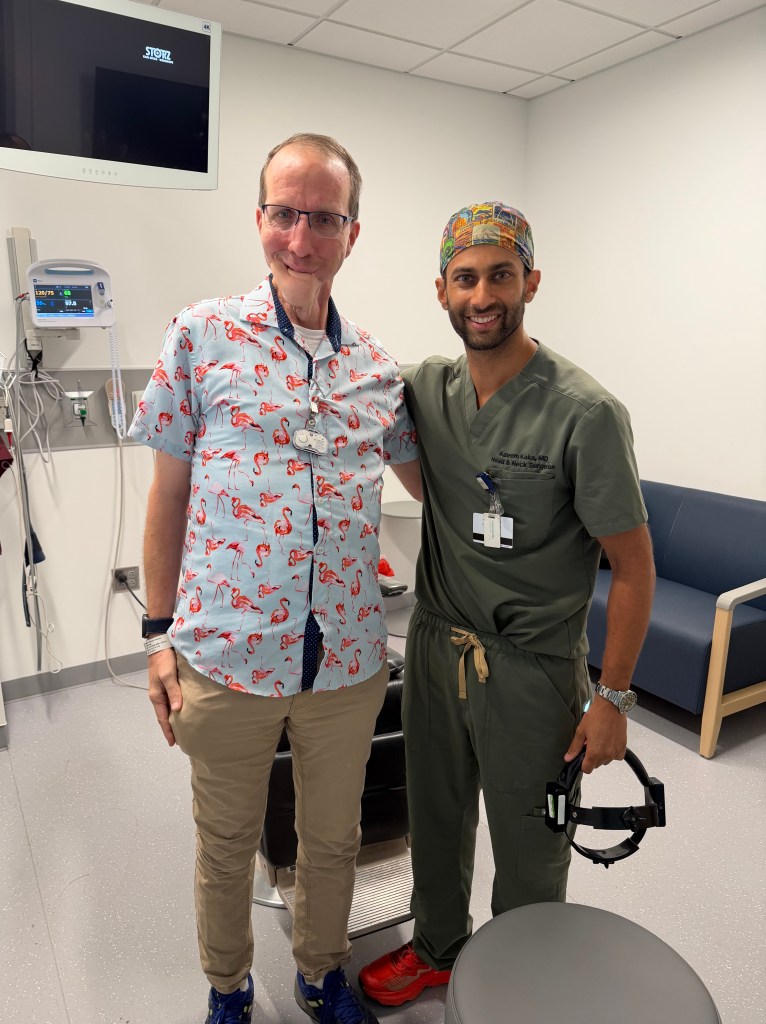
Five years. Forty-three visits to Emory. Countless scans, surgeries, tubes, and prayers. And today, I stood in that familiar hallway, surrounded by the hum of machines and the quiet strength of nurses, and I rang the bell.
They told me I’m cancer free.
Not “no evidence of disease.” Not “stable.” But free.
It’s hard to describe what that means unless you’ve lived in the shadow of it. Unless you’ve sat in waiting rooms where time slows down and hope feels like a fragile thing. Unless you’ve learned to eat through a tube, to speak with effort, to live without taste but still find flavor in life.
Five years ago, I was a different person. I was scared. I was angry. I was grieving the life I thought I’d lost. Without surgery, they told me I’d have six months to live. Even with surgery, the five-year survival rate for my stage and severity was only 38%. I knew the odds. I knew the risks. But I also knew I wasn’t ready to stop fighting.
And someone else believed in me, too.
Dr. Azeem Kaka, my surgeon at Emory, took a chance on me when many others wouldn’t. He told me he presented my case at a national conference, and that several doctors there said they would have passed on surgery due to how advanced and severe it was. But Dr. Kaka didn’t pass. He leaned in. He gave me a shot at life.
Laila Kutan, my nurse practitioner, walked beside me through the hardest parts. She listened. She explained. She cared. And she never treated me like a statistic.
The doctors, nurses, techs, and staff at Emory Hospital have been extraordinary. They didn’t just treat my cancer—they treated me. With dignity. With compassion. With hope.
I had a wife who held my hand through every appointment. I had daughters who gave me reasons to keep showing up. I had friends who showed up when I couldn’t. I had faith—sometimes loud, sometimes quiet, but always there.
I had my mom, who opened her home to me during radiation, who made sure I had a place to rest and recover. I had my sister, who got me anything I needed, who anticipated the things I couldn’t ask for, who carried more than her share of the weight. I had a village—family, friends, colleagues, nurses, strangers—who lifted me when I couldn’t stand.
And I had Michael Owen, a fellow head and neck cancer survivor, who became my cancer coach. He knew the road I was walking because he’d walked it too. He was also a patient of Dr. Kaka, and he helped me navigate the fear, the unknowns, and the long days. His wife, Allison, was a steady presence—kind, encouraging, and always supportive.
I also had Jennifer. We’ve never met in person, but through Facebook, text messages, and phone calls, she became one of my fiercest advocates. She was Dr. Kaka’s first head and neck cancer patient, and she looked out for me during some of my most high-anxiety moments. Her words were a lifeline when I needed them most.
This journey has taken things from me. My ability to eat. My voice, in some ways. My sense of normal. But it’s also given me more than I ever expected.
It gave me perspective. Patience. A deeper love for my family. A calling to teach, to write, to live with intention. It gave me the courage to start over. To become a student teacher. To stand in front of classrooms and talk about government and grit and grace.
It gave me stories. Not all of them easy. But all of them mine.
And today, it gave me a bell.
I rang it for the man I was. For the man I became. For the man who still wakes up every day and chooses to keep going.
I rang it for my daughters, so they’ll know what resilience sounds like.
I rang it for my wife, who never let go.
I rang it for my mom and sister, who carried me through the hardest days.
I rang it for Michael and Allison, for Jennifer, and for every survivor who reached out and said, “You’re not alone.”
I rang it for my best friend, Danny. For every soul I’ve carried with me through this storm.
I rang it for Dr. Kaka, for Laila, and for every person at Emory who saw me as worth saving.
And I rang it for tomorrow. Because now, I get to dream again.
Why Me?
I’ve asked myself this question more times than I can count.
Why am I still here, when others—stronger, kinder, braver—are not? Why did I survive, when people I admired, people who lit up rooms, people who deserved more time… didn’t?
I don’t have an answer. Not a clean one.
I know I had good doctors. I know I had a wife who fought beside me. I know I had daughters who gave me purpose. I know I had faith, even when it flickered. I know I had a support system that never let me fall. But I also know that cancer doesn’t play fair. It doesn’t care how good you are. It doesn’t care how loved you are.
So I carry their names with me. The ones who didn’t make it. The ones who fought just as hard. The ones who deserved their own bell even more than me.
I carry Danny. I carry the stories of patients I met in waiting rooms, whose smiles were full of grace even when their bodies were failing.
I don’t believe I survived because I’m better. I believe I survived because I’m meant to carry something forward. A story. A lesson. A light.
So I write. I teach. I parent. I love. I live.
And I ring the bell for them, too.
I don’t know when my time will come. It might be tomorrow. It might be thirty years from now. Nobody knows.
I’ve been following Sean Dietrich for several years now. His writings, stories, and music have meant a lot to me. I can usually turn to him when I need to be cheered up. If you’re not a follower, I strongly recommend you look him up.
A year or so ago, during a particularly trying time in my life, he wrote a story so meaningful I printed it on resume paper and framed it. Link: https://seandietrich.com/youre-gonna-be-okay/
This morning, he posted another powerful piece with a question that hit me right in the soul:
How would you spend your best day ever?
Here is my response.
The Best Day I Can Imagine
I used to think the best day ever would involve food. A biscuit, maybe. Or a slice of pepperoni pizza so hot it burns the roof of your mouth. I used to dream in flavors—salt, fat, sugar. But cancer took that from me. Took my taste buds. Took my ability to eat. Now, nourishment comes through a tube. And I’ve made peace with that, mostly.
But if I could choose my best day ever, it wouldn’t be about food. It would be about freedom.
Tomorrow, I return to Emory for the 42nd time in five years and three months. I’ll sit in a waiting room that feels like a second home. I’ll hear the hum of machines, the shuffle of nurses, the quiet prayers of other patients. And maybe—just maybe—I’ll hear the words: “You’re cancer free.”
Not “no evidence of disease.” Not “stable.” But free.
I finished radiation on October 23, 2020. Five years is the milestone. I’m close. So close I can taste it—if I could taste anything.
But even if tomorrow doesn’t bring that declaration, my best day ever is still possible. It’s a day with my wife and two daughters. Just the four of us. No anxiety. No financial stress. No medical appointments. No what-ifs.
We’d be together. Laughing. Maybe watching a movie. Maybe walking in the fall air. Maybe just sitting on the porch, listening to the wind. I wouldn’t be worried about bills or scans or tubes or timelines. I’d just be Dad. Husband. Matt.
And I’d feel peace. Not the kind you fake for others. The kind that settles deep in your bones. The kind that whispers, “You made it.”
There’s a moment in Hamilton that always stops me. After the chaos of revolution, after the declarations and duels, two fathers sing to their newborn children. “Dear Theodosia,” they begin—not with fanfare, but with tenderness. Burr and Hamilton, rivals in politics and temperament, pause to make promises. Not to their country. To their children.
“You will come of age with our young nation. We’ll bleed and fight for you, we’ll make it right for you…”
It’s a lullaby wrapped in determination. A promise to create something better—not for fame, but for love.
I’ve thought about that song a lot, but never more than right now.
In five days, I return to Emory for new CT scans. On October 14, I’ll meet with my nurse practitioner and surgeon at Winship Midtown. If the scans are clear, it will mark five years since I finished radiation. Five years since I stood at the edge of uncertainty and chose to fight. Five years since I started whispering my own promises to my daughters—not in song, but in presence.
I’ve lived in the space between “no evidence of disease” and “cancer free.” It’s a quiet place— a place of waiting, watching, and wondering. But it’s also where love grows loud, where bedtime prayers turn into battle cries, and every school concert, silly dance in the kitchen, or whispered “I love you” becomes a declaration: I’m still here.
And yet, as I get ready to cross this threshold, I find myself mourning a different kind of uncertainty. One that doesn’t appear on scans.
Our democracy feels fragile. The ideals I’ve just finished teaching—Revolution, Constitution, compromise—seem increasingly distant from our public discourse. We are angry, distrustful, divided. This reflection isn’t a condemnation. It’s not about taking sides. It’s about promises.
Because “Dear Theodosia” isn’t partisan. It’s parental. It’s the quiet voice that says: I will fight for you. I will make it right for you.
And that’s a promise I still believe in.
I believe in the scan that might say “healed.”
I believe in the student who asks, “Why does the Constitution matter?”
I believe in the daughter who says, “Dad, I’m proud of you.”
I believe in the lullaby that dares to hope.
We may not agree on policy. We may not share the same fears. But we owe our children more than noise. We owe them the quiet fight—the one that builds, that teaches, that heals.
So I return to Emory with gratitude. I return to my classroom with resolve. I return to my daughters with open arms. And I return to the promises I’ve made—not just to survive, but to build something better.
Dear Theodosia, we’re still singing. Even in the storm. Especially in the storm.
Tomorrow marks eleven years since I lost my best friend, Danny Eiler. He passed away on August 25, 2014, at Emory Hospital in Atlanta, Georgia. And even now, not a day goes by that I don’t think about him — his laugh, his advice, his heart for ministry, and the countless memories we built together.
I first met Danny in April 2006 through his girlfriend Cassie, who had just started working at the same lumber treating plant in Ringgold where I had begun two days earlier. The first time I saw Danny, he was visiting Cassie at work. It didn’t take long for Jenn and me to become close friends with both of them. Thursdays became our hangout nights, but honestly, we spent time together most evenings. Danny wasn’t just a friend; he became my accountability partner, someone I could trust with anything.
At the time, Danny was doing youth ministry at a church in LaFayette, and I had the privilege of helping him with that work. Through him, I got to know his family — his mom, dad, and brother — and they welcomed me like one of their own.
When Danny and Cassie got engaged, it felt like a celebration for all of us. I’ll never forget the day he asked me to be his best man. We were riding in Cassie’s car, a Dodge Neon — she was driving, Danny in the passenger seat, Jenn behind Cassie, and me behind Danny. He turned around and asked me, and I was honored beyond words.
We shared so many milestones together. One of the sweetest was when Jenn and I got Liberty, our miniature dachshund, and all four of us were there for it. Liberty became part of our little circle. Sadly, today — August 24 — marks five years since we lost her. It’s hard not to feel the weight of both losses this time of year.
Danny and Cassie’s first son, Cade, was born in June 2008, just ten months after their wedding. I remember the exact moment they told us they were expecting. Jenn and I were driving south on I-75 to visit family when both our phones rang — Cassie called Jenn, and Danny called me. We pulled off near Calhoun, and while they didn’t say it outright, Danny kept calling me “Uncle Matt” and Cassie kept calling Jenn “Aunt Jenn.” We figured it out pretty quickly. Cade was the first child among the four of us, and for a long time, it was just the five of us — Cade included. We took trips together, shared holidays, and Cade felt like a son to Jenn and me.
When Cade was born at the hospital in Ft. Oglethorpe, Jenn and I rushed over to be there. It was only a few miles from our home. Later, when Danny joined The Springs Church in Ringgold to lead youth ministry, Jenn and I followed. Not long after, Danny became the pastor of the church. Watching him grow into that role was inspiring. He had a gift — not just for preaching, but for connecting, for listening, for leading with humility.
In 2012, Jenn and I welcomed our daughter Julie, and Danny and Cassie had their second son, Haddon, in 2013. Life was full. It felt like we were building something lasting — a community, a family, a rhythm.
But in 2012, everything shifted. Danny was diagnosed with Chronic Myeloid Leukemia (CML) — a form of leukemia that, while serious, was considered treatable. We were hopeful. I worked hard to find an organization that could help him get his medication at no cost. It felt like a breakthrough. But as time went on, the treatments didn’t work the way they were supposed to. Danny’s body didn’t respond. The storm we thought we could outrun was gaining strength.
Danny fought with everything he had. For two years, he battled bravely. And on August 25, 2014, he passed away. Jenn and I were with him when he took his last breath — along with Cassie, her father, and another friend. We stayed up the entire night before, knowing the end was near. At 4:30 AM, early Monday morning, Cassie’s father was reading from Romans 8, and the verse that carried us through was Romans 8:18:
“I consider that our present sufferings are not worth comparing with the glory that will be revealed in us.”
It was a sacred moment—a painful one. But also filled with peace.
Two years later, almost to the day, Jenn and I welcomed our second daughter, Caroline, born on August 26, 2016. Her arrival felt like a quiet gift — a reminder that life continues, even after the deepest loss. That joy can still find its way through the cracks of grief.
And just this past June, I got to share something special with Cade — we went to a Dave Matthews Band concert together in Atlanta. Danny and I had always talked about going, but never got the chance. Sharing that moment with Cade felt like honoring Danny in the best way possible. The music, the memories, the connection — it was all there.
As for Cassie, she’s doing well. She’s now a special education teacher at an elementary school here in town, pouring her heart into the next generation. And in June 2021, she married a wonderful man named Jared. Seeing her find happiness again has been a quiet comfort — a reminder that healing doesn’t erase the past, but it can build something new on top of it.
Danny wasn’t just my best friend. He was a brother, a mentor, a fellow traveler in faith. His life left a mark on mine that will never fade. And while I wish we had more time, I’m grateful for every moment we shared.
I carry him with me — in my teaching, in my parenting, in my faith. And I’ll keep telling his story, because he deserves to be remembered.
In the wake of the recent Hurricane Erin, which reached Category 5 status before veering away from the East Coast, I found myself drawn back into one of my lifelong fascinations: weather. There’s something haunting about storms that build with fury, threaten devastation, and then — almost inexplicably — turn away. Erin was one of those storms. A ghost giant, churning offshore, sending rip currents and towering waves toward the coast, but never quite crossing the line.
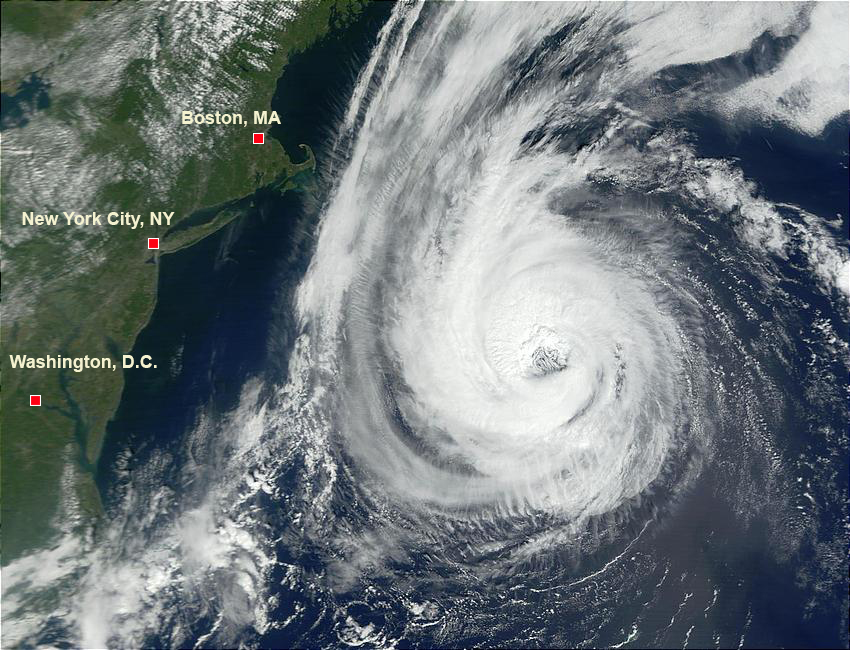
As I delved deeper into the history of storms named Erin, I encountered a haunting coincidence: Hurricane Erin in 2001. On the morning of September 11, Erin was visible from space, a swirling mass of clouds off the coast of New York. NASA’s satellite imagery that day shows something surreal — the hurricane’s eye in the Atlantic, and just south of it, smoke rising from the World Trade Center. The skies over Manhattan were unusually clear that morning, thanks in part to sinking air from Erin’s outer bands and a high-pressure system that swept the storm out to sea.
It’s hard not to wonder: What if Erin had tracked just a little farther west?
Airports might have shut down. Flights could have been delayed. The hijackers’ plans disrupted. Maybe 9/11 would have unfolded differently — or not at all.
That question — what if? — has echoed in my own life.
In March 2020, as the world went into lockdown due to COVID, I started experiencing strange symptoms in my mouth. I dismissed them. Like many others, I was overwhelmed by the uncertainty of the pandemic and hesitant to seek medical care. I waited. By the time I finally went to Emory Hospital in Atlanta that July, the diagnosis was stage 4 cancer. My doctor told me it was aggressive. Fast-moving. Like a storm that had already hit land.
And yet, just like Hurricane Erin, the signs were there.
The warnings were swirling.
I just didn’t see them — or couldn’t.
If I had gone to the ER in March instead of seeing a doctor in May or June, things might have turned out differently. Maybe the cancer would have been caught earlier. Maybe it wouldn’t have been so life-altering.
But then again — maybe I wouldn’t be here, writing this.
Because fighting cancer changed me. It stripped away the illusion of control and forced me to confront the raw edges of life. It pushed me out of my comfort zone, out of my old job, and into a new calling: teaching. I went back to school. I became a student teacher. I found purpose in the classroom, in helping young minds navigate the storms of their own lives.
Weather has always fascinated me because it’s both predictable and wildly chaotic. We can track a hurricane’s path, measure its wind speed, model its trajectory — and still be surprised. Life is no different. We make plans. We build routines. And then something unexpected sweeps in and changes everything.
Sometimes the storm hits.
Sometimes it doesn’t.
But either way, it leaves a mark.
So when I think about Hurricane Erin — both the one from 2001 and the one from 2025 — I see more than just meteorology. I see moments of silence before impact, missed opportunities, and the strange way life unfolds when we’re not paying attention. I see the beauty and terror of near misses. And I see how, even after it’s over, we find new paths forward.
Hurricane Erin on September 11, 2001. It is just off the Northeast Coast. The image was provided by NASA; I just added the approximate city locations.
The first week of my student teaching experience has been a whirlwind of introductions, excitement, and unexpected blessings. While the students officially arrived on Friday, the week began with four days of preplanning — a time to meet faculty, settle in, and prepare for the semester ahead.
Meeting My Mentor
Back in early July, I received an email from Grand Canyon University with the name of my cooperating teacher and school placement. I immediately reached out to Mr. Dempsey, who responded warmly and shared that he’d be teaching three American Government classes — two honors and one college prep. We exchanged a few texts the Sunday before preplanning began, finalizing details and setting the tone for a collaborative partnership.
On Monday morning, I arrived at Heritage High School at 7:30 AM and met Mr. Dempsey in person for the first time. He was incredibly welcoming, introducing me to other teachers and staff before we headed to our first faculty meeting in the cafeteria. Throughout the week, I continued meeting faculty, administrators, and fellow Social Studies teachers — including a department-wide meeting that made me feel like part of a team from day one. I also found out he is a huge Dave Matthews Band fan, which should tell you all you need to know. We were meant to work together. He also has over 25 years of experience in teaching.
Open House and Student Energy
Wednesday evening was Open House, and I was genuinely impressed by the turnout. You might expect high school students to be indifferent to such events, but they showed up in full force, many with their families. It was a quick meet-and-greet, but it gave me a glimpse into the energy and engagement I’d be seeing in the classroom. My youngest, Caroline, also got to meet Mr. Dempsey’s daughter, who is also at the Elementary School.
A New School, A New Perspective
Heritage High School, now 18 years old, is the newest of the three high schools in Catoosa County. While I had visited the theater and track for field trips and Julie’s elementary track meets, I had never stepped inside the school itself. As someone who lives across the street from Ringgold Middle and High School — and who spent last year substituting at Ringgold Middle — I was initially disappointed that my placement wasn’t there or the high school where I had completed almost all of my 100+ practicum hours.
But that feeling quickly faded. Heritage has turned out to be a fantastic placement. The faculty and staff have great chemistry, and the environment is supportive and welcoming. Sure, the classroom numbering system is a little chaotic, but the heart of the school is strong.
First Day with Students
Friday marked the first day of school for students, and it was a great start. The day began with a school-wide assembly and a “get to know the campus” activity for underclassmen, while seniors enjoyed a breakfast. Since we have planning during first block, Mr. Dempsey and I helped out where needed.
Second block brought our first group of students — and my first chance to lead an activity. Mr. Dempsey gave me the opportunity to introduce a lesson, and I even got to grade the benchmark assignment. It wasn’t for an official grade, but it gave us a sense of where the students are starting from. I also got a visitor, Lilly (Cade’s sweet girlfriend), who came by to say hello during lunch. The day flew by, and I’m already looking forward to Monday.
Final Thoughts
I’m only one week into student teaching, but I already feel grateful for where I’ve landed. While I initially hoped to be placed at Ringgold Middle or High School, I’ve learned that sometimes the best opportunities come from unexpected places. Heritage High has welcomed me with open arms, and I’m excited to grow here — not just as a teacher, but as a learner, teammate, and mentor.
“The one thing that doesn’t abide by majority rule is a person’s conscience.” — Atticus Finch
This reflection was born from rereading Harper Lee’s novel and asking myself not just what Atticus Finch stood for, but what his values might mean today — especially in the classroom. As I prepare to teach Social Studies, I find myself drawing courage and clarity from his quiet defiance, his empathy, and his belief in justice. These words are both a tribute and a promise.
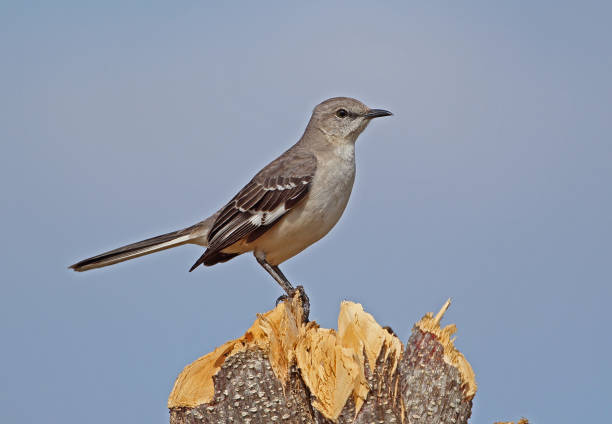
This summer, with more hours than usual and a mind leaning toward reflection, I found myself back in Maycomb County, rereading To Kill a Mockingbird. It wasn’t the only trip I made into the past — I also read Jon Meacham’s Franklin and Winston, an account of an unlikely but profound political friendship. And now, I’ve turned the pages of Go Set a Watchman, Harper Lee’s more unsettling follow-up to the story that shaped generations. These books, each in their own way, prompted me to ask: How do our heroes change when viewed through a different lens? And what lessons still echo when we return to a story after time and experience have reshaped how we read?
I first read To Kill a Mockingbird in tenth grade at Hardaway High School, in Mrs. Romine’s English class — a place where stories began to mean something more to me. Maybe I was predisposed to love the book; my mom, herself an English teacher, had taught it too. But it wasn’t just admiration passed down — it was discovery. As part of our class, we held a mock trial, and I played Atticus Finch. I don’t remember the verdict, but I remember the feeling: standing in his shoes, arguing for justice in a world tilted by bias. Our jury had women on it, unlike the all-male reality of 1930s Alabama — a small but meaningful contrast that made me reflect even then on who gets to be heard.
I didn’t realize it at the time, but embodying Atticus Finch during that mock trial was less a performance and more a prophecy. I argued with conviction, not just for Tom Robinson, but for the idea that truth matters — even when it’s inconvenient, even when it’s obscured. I listened. I questioned. I stood calmly in front of my peers, much as I’ll soon stand before my students. Teaching, like law, is not only about facts; it’s about fairness. It’s about helping young minds ask “why,” consider “what if,” and feel empowered to say “I believe.”
Atticus Finch, in To Kill a Mockingbird, stands as a paragon of principled leadership and moral clarity. He’s not a hero because he wins — he’s one because he tries, in the face of deeply embedded injustice. He approaches the world with a quiet steadiness, teaching his children and his community by modeling how to live with dignity and decency. Atticus doesn’t posture or chase recognition; he simply does what is right, even when it’s thankless. In the courtroom, on his porch, and through his parenting, he lives out a belief in fairness that transcends cultural convenience. For me, his character represents the gold standard of civic responsibility: to speak calmly, act courageously, and listen generously.
Atticus’s ethos — “you never really understand a person until you consider things from his point of view” — feels tailor-made for the divisiveness we see today. In an age of echo chambers and algorithm-driven outrage, radical empathy demands deliberate pause. It means asking not just “What do I believe?” but “Where is this other person coming from?” This kind of understanding isn’t soft or passive — it’s rigorous, uncomfortable, and often inconvenient. But when practiced with sincerity, radical empathy becomes an act of resistance against polarization. It allows us to sit with difference without defensiveness, and to seek common ground without compromising our core values. Atticus offers us a lens not for agreement, but for genuine connection.
In reading To Kill a Mockingbird, I didn’t just admire Atticus Finch — I chose him as a model for the kind of person, and the kind of educator, I hope to be. His unshakable sense of justice, his quiet strength, and his radical commitment to understanding others offer more than literary admiration — they offer a blueprint for leadership in the classroom and beyond. Teaching Social Studies is not just about government structures or historical facts; it’s about shaping citizens who ask difficult questions, engage with complexity, and seek truth with empathy.
Atticus reminded us, “There is one human institution that makes a pauper the equal of a Rockefeller, the stupid man the equal of an Einstein… That institution, gentlemen, is a court.” In the classroom, I see an echo of that institution — a place where every student, regardless of background, is offered equal footing to grow, question, and be heard. And when the work becomes tough, and real change feels far off, I remember his words to Jem: “I wanted you to see what real courage is… It’s when you know you’re licked before you begin but you begin anyway and you see it through no matter what.”
If I can foster even a fraction of Atticus’s moral clarity and patience in my students, then I’ll consider my role not just successful, but deeply meaningful.
On July 29, 2020, I underwent a life-saving cancer surgery at Emory Midtown Hospital. It lasted over eight hours, rebuilt my lower jaw, and gave me a future I wasn’t sure I’d have. Yesterday marked five years since that day—a quiet milestone, but one filled with deep gratitude and reflection.
The Days Leading Up
I was admitted on Monday, July 27th, due to dangerously low magnesium and potassium levels. My last real meal—chicken pot pie from the hospital cafeteria—was that afternoon. I didn’t know it then, but it would be my final meal before a feeding tube became my lifeline.
COVID-19 was in full force. Visitor restrictions meant I was alone in the hospital, with FaceTime as my only connection to family. The isolation was heavy, but the nurses became my surrogate visitors—kind, attentive, and quietly heroic.
A Surgery Almost Canceled
The morning of my surgery felt delayed. At first, we thought it was my bloodwork. Later, I learned the real reason: a shortage of nurses. My surgery was nearly canceled.
But Dr. Azeem Kaka—my oncologist and surgeon—advocated for me. He changed his vacation plans to be there. He believed in me when others might not have. That belief saved my life.
Dr. Kaka would later present my case at a national conference. Many doctors told him they would have opted against surgery due to the advanced nature of my cancer. Without it, I had 6–8 months to live.
The Procedure
Sometime after 9:00 AM, the surgery began. I don’t remember it, but I was told it lasted over eight hours. The tumor—over 5 cm—was removed from the base of my mouth. My lower jaw was rebuilt using bone from my left leg and a skin graft from my thigh.
Dr. Kaka was only 35 years old. I still marvel at the complexity and courage it took to perform such a procedure.
Recovery and Isolation
I woke up in the ICU, swollen and disoriented. I spent two days there before receiving my feeding tube on Friday, July 31st.
No visitors. No hugs. Just screens and voices. But the nurses—those angels in scrubs—made sure I never felt completely alone.
I remained in the hospital until August 6th, then went to my mom’s home in Columbus to recover. In September and October, I completed 32 sessions of radiation.
Five Years Later
Yesterday, I spent the day quietly at home with my daughters. I took Julie to an appointment. It was ordinary—and that made it extraordinary.
I also received a text from a friend—another survivor of head and neck cancer, also treated by Dr. Kaka. She introduced me to someone newly diagnosed, someone who reminded her of me. He was diagnosed and had surgery all within the last six weeks and is battling anxiety, as I am.
We texted. Then we talked. On the very anniversary of my surgery, I got to tell someone: You are not alone.
Why I Write This
I write to remember. I write to honor. I write to remind others—especially those facing the same diagnosis—that there is life after the valley. There is hope. There is connection.
Five years ago, I was given a second chance. Today, I use it to walk alongside others.
If you or someone you love is facing head and neck cancer, or any cancer diagnosis, know this: you are not alone. There are survivors, advocates, and friends waiting to walk with you.
Yesterday, our dear friend Cassie lost her grandmother, Ms. Joy Camp, at the age of 88. For those who knew her, Ms. Camp wasn’t just a presence—she was a quiet light. She gave generously, welcomed warmly, and lived with a grace that didn’t seek attention but left a lasting impression.
Cassie and her family have always been like family to us. Through her, we came to know and love Ms. Camp.
One of my most vivid memories of Ms. Camp is from Thanksgiving Day, 2012. Our daughter, Julie, had just been born on November 12th—too young to travel to be with our families over long distances. Ms. Camp opened her home to us without hesitation. That day, her table became our table. Her kindness became our comfort. It was one of those rare moments where someone’s generosity quietly brightens your life.
We shared other meals at her house—Easter lunch one year, casual visits, and the annual Fall Get-Together hosted by Cassie’s father next door. There was always a bonfire, a hayride, and Ms. Camp helping behind the scenes, making sure everything felt just right. I also remember watching Alabama and Michigan play college football in the Rose Bowl at her house once. Cassie was a Michigan fan, while Jennifer was an Alabama fan. She didn’t need to be the center of attention—she simply made sure everyone else felt seen.
One moment that still makes me smile: running into her at Walgreens right next to the bank, just before Valentine’s Day one year. She was picking out gifts for Cade and Haddon, Cassie’s boys. That moment said everything about her—thoughtful, intentional, always giving.
For many years, Ms. Camp worked at Northwest Georgia Bank as the secretary to the bank president before it became FirstBank. I’d see her there sometimes—always composed, always gracious. She was part of the fabric of Ringgold—steady, familiar, kind.
I never had the chance to meet her husband, Cassie’s grandfather, who passed away before we ever knew Cassie. But I imagine he would have been proud of the life she lived and the love she gave.
Ms. Camp wasn’t loud about her legacy—but it echoes in the lives she touched. In Cassie’s strength. In Cade and Haddon’s memories. In the memories we carry from her table, and her quiet acts of care.
We’ll miss her. But we’ll carry her with us—in stories, in traditions, and in the way we give to others, just as she once did for us.
Thank you, Ms. Camp. You gave us more than meals—you gave us belonging.