A Song for Cade

I’ve never had a son. God gave me two incredible daughters — bright, funny, compassionate girls who fill my life with more joy than I ever deserved. But somewhere along the way, without any official title or biological claim, I found myself with something that felt a lot like sons. Two boys who weren’t mine, but who somehow became part of my heart anyway: Cade and his younger brother, Haddon.

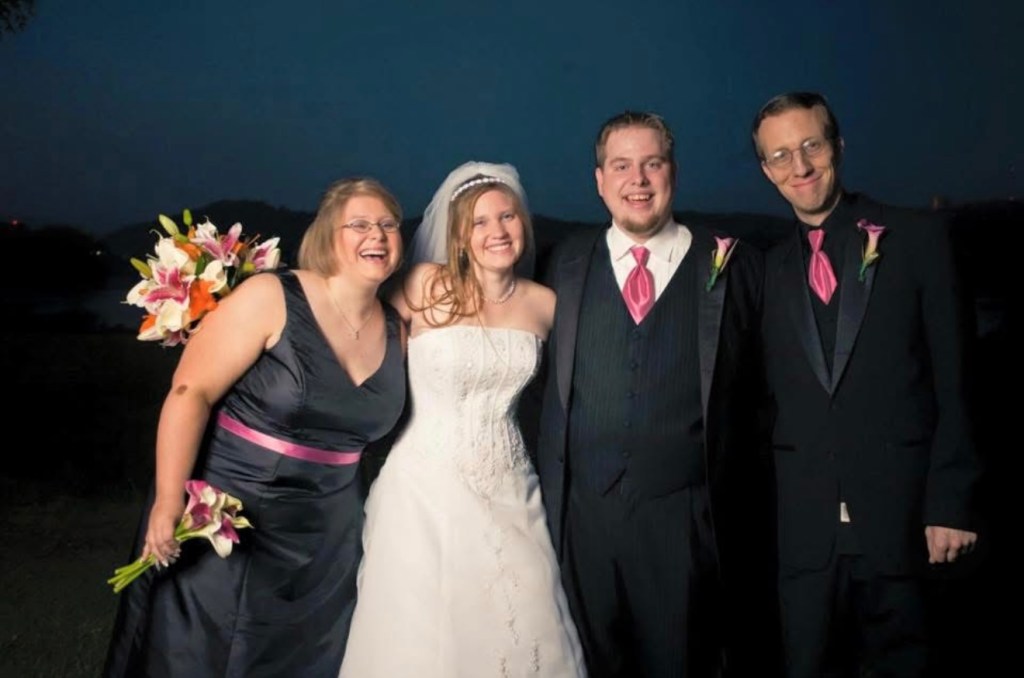
I’ve known Cade since before he took his first breath. I was at the hospital the night he was born — waiting, praying, hoping. Danny, my best friend, was about to become a father, and I was about to meet the little boy who would change all of our lives. When Cade finally arrived, I remember thinking, This kid is going to matter. He’s going to leave a mark.

I had no idea then just how true that would be.

Danny wasn’t just my best friend — he was a pastor. A man of deep faith, quiet strength, and a gentleness that made people feel safe. He loved God, he loved his family, and he loved music — especially Dave Matthews Band. He and I shared that love, and it became one of the threads that tied our friendship together.

When we lost Danny in 2014 — far too young, far too soon — the world shifted. There’s no manual for how to help a child navigate the kind of loss that even adults struggle to understand. But I knew one thing: I wasn’t going anywhere. So I started what I called “man days.” I’d pick Cade up, and we’d go do something fun. Nothing complicated — just time, presence, laughter, distraction, connection. I wasn’t trying to fill Danny’s shoes. No one could. I was just trying to make sure Cade never felt like he was walking alone.

And then life, in its strange and beautiful way, brought Jared into the picture. A man who didn’t try to replace Danny, but honored him by loving Cade with humility and steadiness. Watching Jared step into that role — not loudly, not forcefully, but faithfully — has been one of the quiet miracles of this story. Cade has been blessed with two fathers: one who shaped his beginning, and one who helped guide his becoming.

And of course, there’s Cassie. I don’t know if I’ve ever seen someone carry so much weight with so much grace. She walked through fire to give her boys stability, love, and a home that didn’t crumble under the weight of grief. She is one of Jenn’s and my closest friends, and she deserves every ounce of honor that comes her way. Cade’s strength didn’t come from nowhere — it came from her.

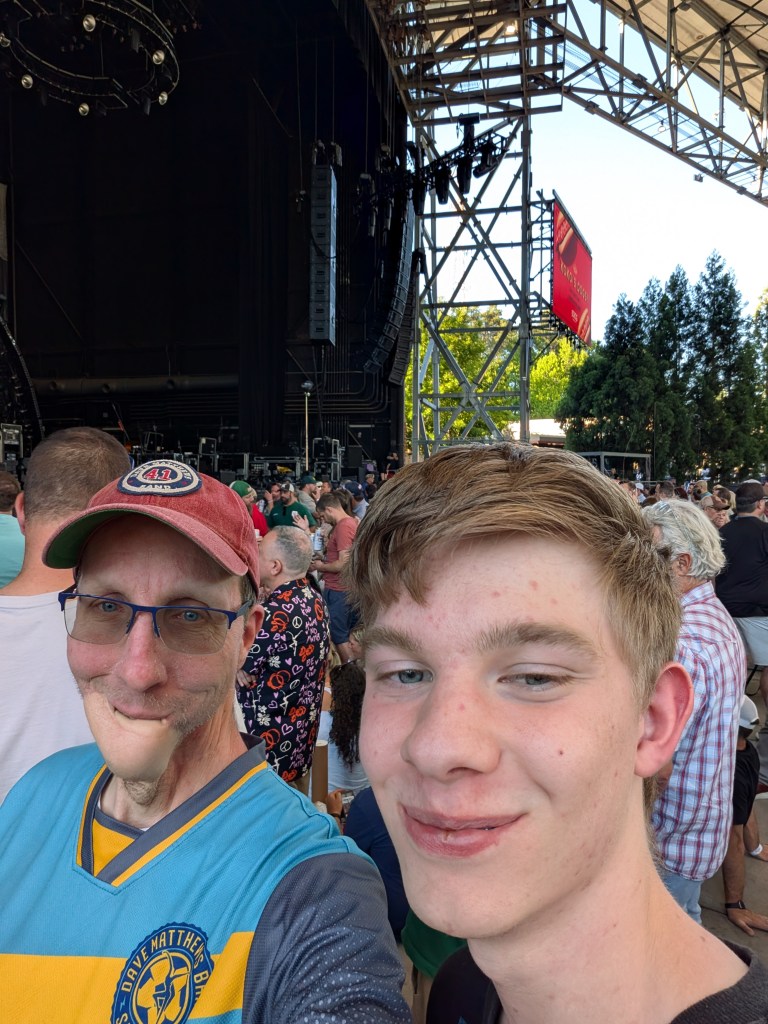
Last Friday, Cade and I drove to Alpharetta to see the Dave Matthews Band — one of our shared favorites, and one of Danny’s too. This was my sixth time seeing them, Cade’s second. Last year’s show was a wild adventure — thunder, traffic, chaos, and a moment that felt like a message from heaven. I wrote about that night, because some stories insist on being told.

This year felt different. Calmer. Fuller. Like a chapter closing and another opening at the same time.

And then it happened.

They played that song — Danny’s favorite DMB song. One of my top five, a song that’s carried memories for years, even if it wasn’t the one I’d put at the very top. And when those opening notes started, something in the air shifted. I didn’t look at Cade, and he didn’t look at me — we didn’t need to. The moment spoke for itself. It felt like a quiet nudge from heaven, the kind only music can deliver. A pastor’s favorite song, rising up into the night sky while his son — now grown, now stepping into his own calling — stood just a few feet away. A song for a milestone Danny should have lived to see.

Tomorrow, Cade graduates from high school with honors. Honors. After everything he’s walked through. After every mountain he’s had to climb before he even reached adulthood. And now he’s heading to Reinhardt University with a calling on his life — he wants to be a pastor. Just like his dad.

Legacy isn’t always loud. Sometimes it’s a whisper. A nudge. A song. A calling passed from father to son, carried through grief, strengthened by love, and confirmed in moments like the one we had Friday night.

Last night, we celebrated Cade and his girlfriend Lily — who graduates today from the same high school where I did my student teaching. Watching the two of them grow together, support each other, and cheer each other on has been something special. They’re good for each other. They’re good to each other.

We didn’t give toasts at the party, but I had one ready. I’ll share part of it here, because it belongs in this story:

“Tonight is special. It’s one of those moments where time slows down just long enough for you to look around and realize how far someone has come. Cade, your dad was my best friend. I stood beside him as the best man at his wedding. Losing him was a heartbreak none of us were ready for — and certainly not you. But the way you’ve carried his legacy… the way you’ve grown into a young man he would recognize and be proud of… that’s something extraordinary.”

Cade has walked through more than most people twice his age. And yet he stands here — steady, kind, humble, strong. Not hardened by loss, but shaped by it. Not defined by grief, but deepened by it.

I am proud of him. His mother is proud of him. Jared is proud of him. And his father — the man who left us too soon — is proud of him in ways we can only imagine.

Tomorrow, when Cade walks across that stage, it won’t just be a diploma he’s carrying. It will be legacy. It will be resilience. It will be love — the kind that spans years, friendships, families, and even heaven.

Cade, if you ever read this: I love you, kid. I always have. I always will. You’re not my son, not by blood or by name — but you’ve been a part of my heart since the night you were born. And watching you become the man you are today has been one of the greatest honors of my life.

Here’s to the next chapter. Here’s to the songs we’ll keep singing. Here’s to the legacy you carry and the future you’re building.

Congratulations, Cade.

Your dad would be so proud.

And so am I.

When Kindness Interrupts the Noise

Some days it feels like the world is held together by worn threads. You can hear it in the way people talk to each other, or more often, the way they talk about each other. Everyone seems certain — certain that what they believe is best, certain that they’re correct, certain that the person on the other side is the problem. Everyone seems loud. And I felt that immensity the other day — not because of anything dramatic, but because of something small. A comment. A tone. A moment where two people who should have understood each other chose distance instead. It made me stop and think about how easy division has become. And how costly.

Division doesn’t just separate opinions; it separates people. It makes us forget that the person across from us has a story, a family, a history, a heart. It makes us quicker to assume the worst and slower to extend grace. I see it in schools sometimes — not in the big blowups, but in the quiet moments. Two students who won’t sit together because of something said weeks ago. A teacher and a parent who both want the best for a child but can’t seem to hear each other. Small fractures that, left alone, become fault lines.

But then, every now and then, kindness interrupts the noise.

A few weeks ago, I watched a retired teacher‑administrator stop what she was doing, sit beside a student who was clearly overwhelmed, and simply say, “Take your time. I’m right here.” No lecture. No frustration. Just presence. And you could feel it — the way gentleness can settle a space the way nothing else can. It reminded me that kindness doesn’t need to be dramatic to be powerful. Sometimes it’s just someone choosing patience when the world is pushing them toward impatience. And watching that moment, I realized how hungry we all are for that kind of steadiness.

Maya Angelou understood that kind of power. She often shared one of her most enduring lines during her public talks in the early 1990s — including interviews with Oprah Winfrey and later in Oprah’s Master Class — when she reflected on the teachers and mentors who shaped her life. She said, “People will forget what you said, people will forget what you did, but people will never forget how you made them feel.” She wasn’t speaking as a poet or a public figure in those moments. She was speaking as a woman who had survived trauma, injustice, and loss — and who still believed in the transformative power of human connection. That quote has stayed with me for years. I even keep it in my email signature as a reminder of the kind of person I want to be.

Kindness isn’t weakness.
It’s discipline.
It’s courage.
It’s choosing to see a person fully — even when it would be easier not to.

And I think about my daughters. I think about my future students. I think about the world they’re inheriting and the one we’re shaping in front of them. I don’t want them to grow up believing that the loudest voice is the strongest one. I want them to know that strength can be quiet. That listening is not surrender. That compassion is not naïve. That you can disagree without dehumanizing.

I want them to know that kindness is not something you offer because the world is gentle — but because the world is not.

So here’s the challenge I keep coming back to, for myself as much as anyone else: What if we tried listening first? What if we assumed good intentions before bad? What if we chose kindness even when it isn’t returned?

Division may be loud, but kindness is steady — and steady things last.

A Month of Sundays

It feels like it’s been a month of Sundays since I last sat down to write. Life has been full — not always loud, not always dramatic, but full in that quiet, steady way that sneaks up on you. A birthday, an anniversary, a trip back to Birmingham, a house full of memories, a job search beginning to stir, a month dedicated to the cancer I once fought, and a world that feels more divided by the day. Somewhere in the middle of all that, I realized I hadn’t written anything in weeks. So tonight, I’m catching up — not just for you, but for myself. Sometimes writing is the only way I can slow life down long enough to see it clearly.

Turning 48

Last month, on March 15, I turned 48. I’m still not sure how that number is supposed to feel, but I can tell you this: I felt incredibly loved. My phone buzzed all day with messages, comments, and well wishes on Facebook. And here’s the funny part — I’m terrible at wishing people happy birthday on social media. I always mean to, but I forget, or I get distracted, or I tell myself I’ll do it later and then “later” becomes “never.” Honestly, I had almost given up on Facebook altogether. The negativity, the arguments, the constant outrage… it wears on you.

But on my birthday, all of that faded into the background. For one day, Facebook felt like it used to — a place where people simply showed up for each other. And I felt every bit of it. It reminded me that even in the middle of all the noise, there are still people who care, who take a moment to be kind, who choose connection over conflict. So if you were one of the people who took a moment to send a message or leave a comment, thank you. You made 48 feel like a gift.

Twenty-Two Years

Just twelve days later, on March 27, my wife and I celebrated our 22nd anniversary. Twenty-two years. It’s hard to wrap my mind around that sometimes. We’ve lived a lot of life together — the kind that stretches you, strengthens you, humbles you, and teaches you what love actually looks like when the honeymoon phase is long gone and real life has settled in.

Marriage isn’t a straight line. It’s a winding road with unexpected turns, breathtaking views, and the occasional pothole that rattles you a bit. But through every season — the easy ones and the hard ones — we’ve kept choosing each other. That’s what I’m most grateful for. Not the perfection, but the persistence. Not the fairy tale, but the faithfulness. Twenty-two years in, I’m still thankful I get to walk through life with her. And as we get older, I find myself appreciating the small things more — the conversations at the end of a long day, the shared laughter over something only we would find funny, the quiet moments that remind me why we started this journey in the first place.

Back to Birmingham

Spring Break took me to Birmingham, but not for a vacation. My aunt Nancy’s house — which was my grandparents’ house before her — is being cleaned out. Walking through that house was like stepping into a time capsule. Every room held a piece of my childhood. Every drawer had something tucked away that carried a story.

We found treasures — real treasures. Jewelry that my daughters will one day wear. Dolls and a homemade stuffed bear that my grandmother stitched together with her own hands. Electronics from decades past. And then there were the pictures. Hundreds and hundreds of pictures. Some I had never seen. Some I hadn’t seen in years. Some that made me laugh. Some that made me stop and sit down for a minute.

And through it all, I got to work alongside my cousins. We shared memories, swapped stories, and rediscovered pieces of our family history together. It was emotional, yes, but it was also healing — a reminder that even when people are gone, the things they leave behind still have a way of bringing us together.

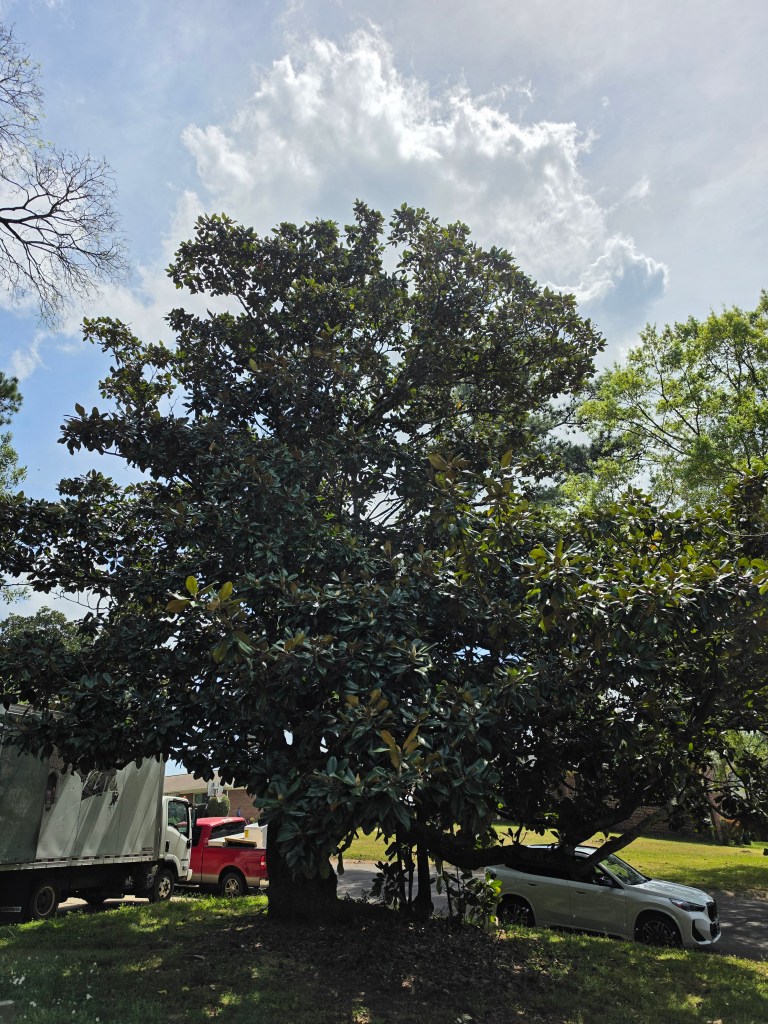
Out in the yard stood the Magnolia tree — the same one I climbed as a boy, the same one that shaded countless family gatherings, the same one that has watched generations come and go. I took a picture of it this time. That tree feels like a witness to our family’s story, and it felt right to make it the image for this post. Its branches hold more than leaves — they hold memories, childhood, roots, and the reminder that some things endure even when everything else changes.

The Job Search Begins

Back home, the job search is starting to move. Positions for next school year are opening, and for the first time, it feels like all the work I’ve put in — the two years of classes, the 15 weeks of student teaching, the late nights, the lesson plans, the observations — might actually lead to something real.

It’s a strange mix of excitement and nerves. I want to teach. I’m ready to teach. I’m ready to have a classroom of my own, to build relationships with students, to bring history and literacy to life, to help kids see the world with curiosity and confidence. I don’t know exactly where I’ll land yet, but the doors are starting to crack open. And that’s enough for now. Hope is a powerful thing, especially when you’ve worked hard for it.

April: Head and Neck Cancer Awareness Month

April is Head and Neck Cancer Awareness Month, and I can’t let it pass without speaking to it. Being a survivor changes you. It changes the way you see birthdays, anniversaries, ordinary days, and even the difficult ones. It changes the way you look at your own reflection. It changes the way you think about time. It changes what you fear — and what you no longer fear.

Head and neck cancers don’t always get the attention that other cancers do, but they should. Early detection matters. Awareness matters. Support matters. Survivors matter. And the people still fighting — they matter most of all.

If you’re walking through that journey right now, or if someone you love is, I’m with you. Please reach out. I would love to talk. I remember the fear, the uncertainty, the exhaustion, the prayers whispered in the dark. I remember the people who stood with me. And I remember the moment I realized I was going to get to keep living my life. I don’t take that lightly. Not ever. Survivorship isn’t just something you celebrate — it’s something you carry with you, something that shapes the way you move through the world.

A Challenge in a Divided Time

And then there’s the world around us — loud, divided, angry, exhausted. Everywhere you look, someone is arguing, attacking, dismissing, or tearing down someone else. It feels like we’ve forgotten how to disagree without dehumanizing each other. We’ve forgotten how to listen. We’ve forgotten how to assume the best instead of the worst.

So here’s my challenge — to myself first, and then to anyone reading this:

Do something good.
Choose kindness when it’s easier to choose anger.
Speak gently when the world is shouting.
Refuse to join the mob when it turns on someone who thinks differently.
Lead with compassion. Lead with patience. Lead with grace.

We don’t have to match the noise of the world.
We can be something quieter. Something steadier. Something better.

And honestly, getting into a shouting match on social media isn’t going to change anyone’s mind. But a small act of kindness might. A thoughtful conversation might. A willingness to listen might. We can’t fix the whole world, but we can make our corner of it a little more humane.

Closing

So that’s my past few months — a birthday full of kindness, an anniversary full of gratitude, a Magnolia tree full of memories, a house full of treasures, a job search full of hope, a month full of meaning for cancer survivors, and a world full of opportunities to choose compassion.

If you’ve read this far, thank you. Thank you for being part of my story. And I hope, in some small way, this encourages you in yours. Life moves fast, but writing helps me slow down long enough to see it clearly — and I’m grateful you’re here to read along.

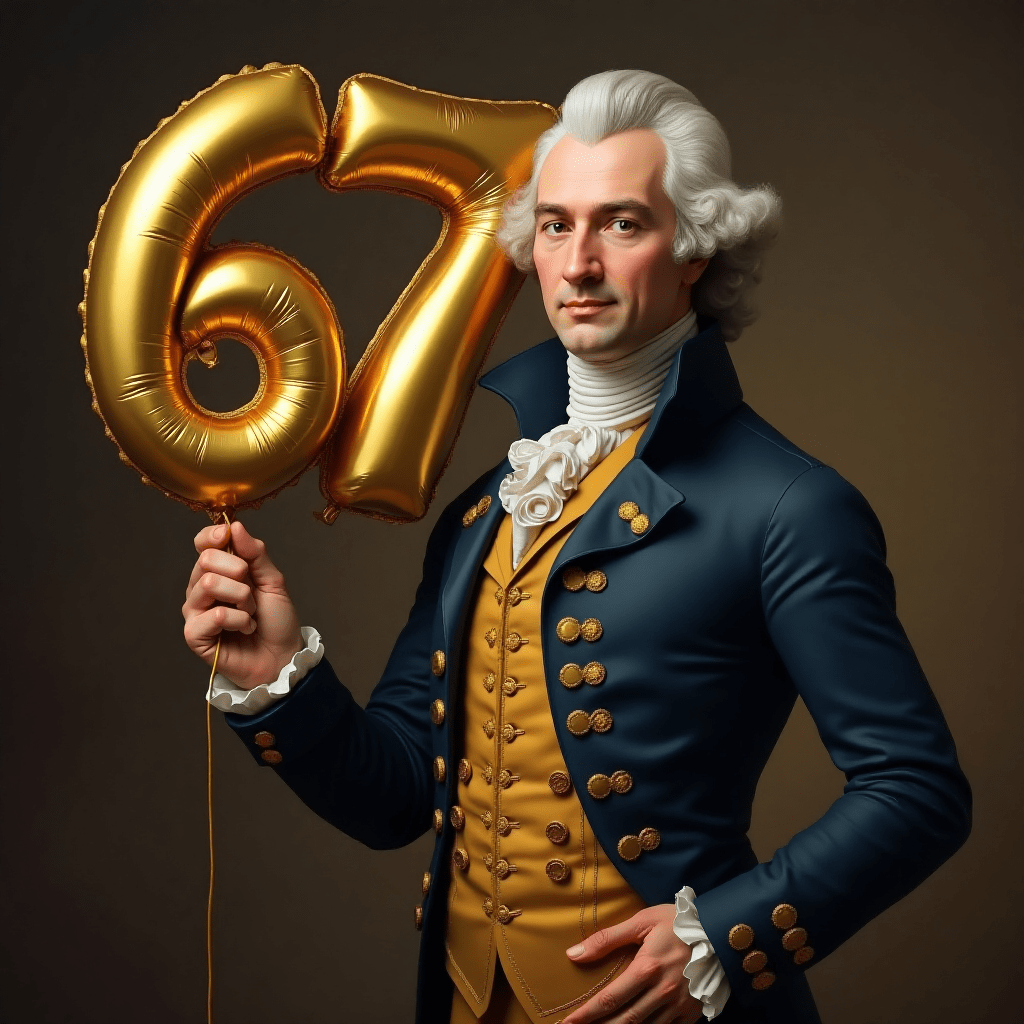
From Meme to Milestone: Day 67 at Heritage

Today marks my final day of student teaching—and fittingly, it also happens to be the 67th school day. Across schools everywhere, the number 67 has become a running joke, a meme, a little craze that students and teachers alike have embraced. For me, though, the number 67 will always carry a deeper meaning. Out of 70 total days in this placement—including four pre-service days at the start and one day I missed in October for my Emory appointment—67 were spent in the classroom, learning, teaching, and growing alongside the Heritage community.

When I first learned I’d be placed at Heritage, I’ll admit it wasn’t in my top two choices. In fact, I had my heart set on one particular school. But a wise principal encouraged me to broaden my horizons and try something new—specifically, to step into the high school world. Up to that point, my experience at that level was limited to just observation hours. I wasn’t sure what to expect, and I wondered if I’d be ready.

Looking back now, I am so glad that Heritage is where I ended up. This placement turned out to be a real success. The students, staff, and community here have given me experiences I never could have imagined, and they’ve shaped me in ways that will stay with me long after graduation. I’ve learned not only about teaching content but also about building relationships, fostering engagement, and finding joy in the daily rhythms of school life—even in something as quirky as the number 67.

No reflection on these 67 school days would be complete without mentioning the people who walked alongside me. My mentor, Mr. Ethan Dempsey, has been a steady guide and source of encouragement throughout this journey. His wisdom, patience, and example have shaped not only my teaching practice but also my vision for the kind of educator I hope to become. I hit a grand slam with him—not just because of his expertise, but because of the way he treated me as a true colleague. He never relegated me to menial tasks like making copies or sitting on the sidelines. Instead, he invited me into the heart of the classroom, trusted me with meaningful responsibilities, and gave me space to grow. He offered feedback with care, modeled professionalism with humility, and made sure I felt both challenged and supported. His mentorship has left a lasting imprint, and I’ll carry his example with me into every classroom I enter.

The entire Social Studies department welcomed me as one of their own, offering advice, resources, and camaraderie that made each day richer. Beyond that, the entire faculty, staff, and administration at Heritage High School created an environment where I felt supported and valued. Their professionalism and kindness set the tone for the school, and I am grateful to have learned in such a collaborative community. My GCU Faculty Supervisor, Mr. C.L. Dunn, was very helpful as well. He had some great feedback after observing me during my four observation evaluations.

And of course, the students—nearly all respectful, mostly engaged, and often inspiring—reminded me daily why this work matters. They brought energy, curiosity, and humor into the classroom, and they challenged me to grow as both a teacher and a person.

Tomorrow I’ll finish my online student teaching course, and with it, my M.Ed in Secondary Education. I’ll graduate with a GPA of 3.83, but more importantly, with gratitude for the people and places that made this journey possible. Heritage wasn’t the plan I thought I wanted, but it was exactly the placement I needed.As I move forward, I’ll carry with me the lessons of these 67 school days: that growth often comes when we step outside our comfort zone, that laughter and community matter as much as curriculum, and that sometimes the best opportunities are the ones we didn’t expect.

Alexander Hamilton holding a 67 Number Balloon.

Turning Sorrow Into Solidarity

Grief is not something we schedule. It doesn’t wait until we are ready, until our hearts are steady, until we’ve had time to recover from the last loss. It arrives unannounced, sometimes again and again, until it feels like the hits keep coming.

On Friday, a student at our school passed away. I didn’t know him personally, but he was part of our community, an athlete, a part of the flow of our days. And now, he is gone.

It feels overwhelming. Just the day before, I had written about grief for two others. Then, suddenly, another loss—closer, heavier, harder to process. I am sad for him. I am sad for his family. I am sad for the friends who now carry memories that will never be added to. I am sad that he may have felt like he had no one to turn to, no one to talk to.

When grief keeps hitting, it can feel like the ground beneath us is shifting. We wonder how much more we can take, how many more losses we can bear. But maybe the way forward is not to try to carry it alone.

The only way forward is together. We lean on each other, knowing that even the smallest gestures—a smile in the hallway, a kind word, or a simple “I’m here”—can remind someone that they are not alone. In moments like these, presence matters more than perfection. We also allow ourselves to grieve because even if we didn’t know the person closely, their absence still leaves a mark on our community. Their life mattered, and recognizing that truth honors both them and the people who loved them.

We honor the lives lost by remembering them, speaking their names, and carrying compassion in their memory. To honor someone means keeping their story alive, even in small ways, and letting their impact spread beyond the moment of grief. Throughout it all, we choose hope—not because it erases the pain, but because it gives us the strength to continue. Hope helps us believe that tomorrow can be brighter, that healing is possible, and that no one should ever feel invisible. And we remember that God gives us power, as my pastor reminded us yesterday. God can help us get through even the hardest weeks. Faith doesn’t take away the sorrow, but it gives us the courage to keep moving forward.

At the same time, seeking help is not something to be ashamed of. Mental health is not bad—it is part of being human. Seeing a counselor is a wonderful thing. Medications are also a good thing; I take medicine for anxiety myself, and I know it helps. Asking for help is a sign of strength, not weakness.

Finally, we must look out for one another. If you see or hear something, say something. Sometimes the smallest act of speaking up can save a life.

Grief teaches us that every life matters, and every absence reshapes the community it touches. When the hits keep coming, the only way through is together—by holding space for sorrow, offering compassion, and reminding each other that no one should feel invisible.

We cannot undo what has happened. But we can choose to make life feel less lonely. Perhaps that is how we get through a week that hurts—by turning sorrow into solidarity, by remembering that even strangers deserve our grief, our respect, and our care, and by choosing to walk forward together, even when the path feels heavy.

If you have been blessed with a son or daughter, take time to tell them how much you love them and how proud you are of them. Each evening, ask about their day and give them the chance to truly talk, to share what’s on their mind, and to ask questions. And don’t forget the hugs—lots of them.

But this call is not only for parents. It is for all of us. Every person has someone they can encourage, someone they can check in on, someone who needs to be reminded they are seen and valued. A kind word to a friend, a text to a colleague, a smile to a stranger—these small acts can make a difference.

Love is not limited to family ties; it is a gift we can extend to anyone.

The Bell

Today, I rang the bell.

Five years. Forty-three visits to Emory. Countless scans, surgeries, tubes, and prayers. And today, I stood in that familiar hallway, surrounded by the hum of machines and the quiet strength of nurses, and I rang the bell.

They told me I’m cancer free.

Not “no evidence of disease.” Not “stable.” But free.

It’s hard to describe what that means unless you’ve lived in the shadow of it. Unless you’ve sat in waiting rooms where time slows down and hope feels like a fragile thing. Unless you’ve learned to eat through a tube, to speak with effort, to live without taste but still find flavor in life.

Five years ago, I was a different person. I was scared. I was angry. I was grieving the life I thought I’d lost. Without surgery, they told me I’d have six months to live. Even with surgery, the five-year survival rate for my stage and severity was only 38%. I knew the odds. I knew the risks. But I also knew I wasn’t ready to stop fighting.

And someone else believed in me, too.

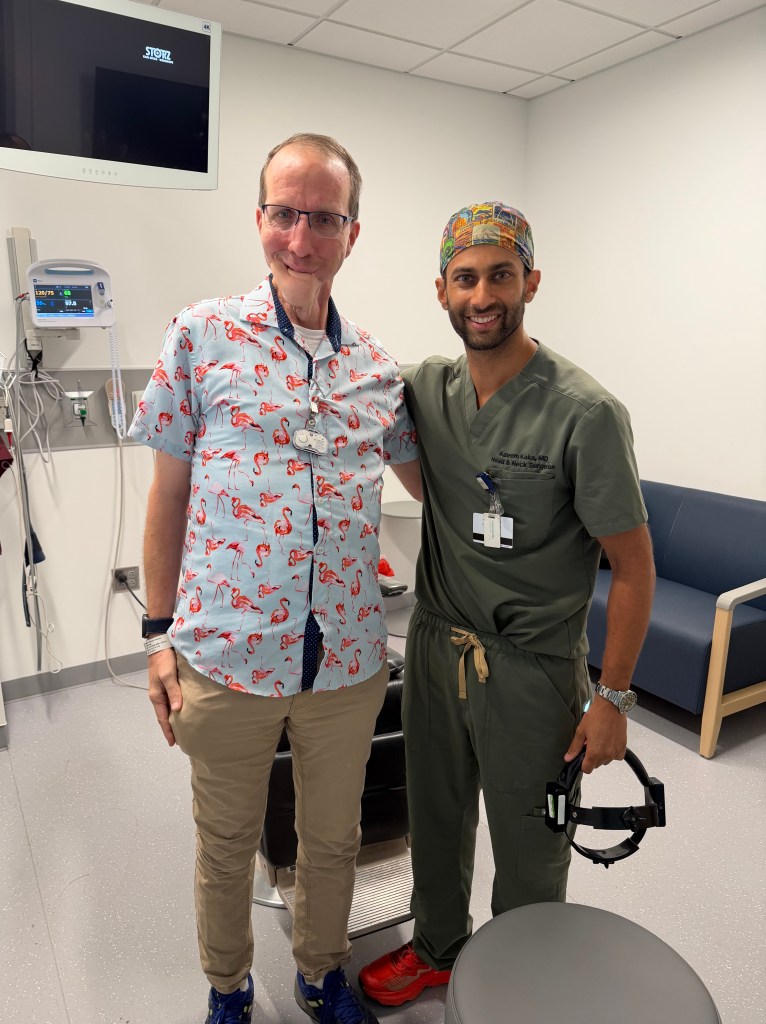
Dr. Azeem Kaka, my surgeon at Emory, took a chance on me when many others wouldn’t. He told me he presented my case at a national conference, and that several doctors there said they would have passed on surgery due to how advanced and severe it was. But Dr. Kaka didn’t pass. He leaned in. He gave me a shot at life.

Laila Kutan, my nurse practitioner, walked beside me through the hardest parts. She listened. She explained. She cared. And she never treated me like a statistic.

The doctors, nurses, techs, and staff at Emory Hospital have been extraordinary. They didn’t just treat my cancer—they treated me. With dignity. With compassion. With hope.

I had a wife who held my hand through every appointment. I had daughters who gave me reasons to keep showing up. I had friends who showed up when I couldn’t. I had faith—sometimes loud, sometimes quiet, but always there.

I had my mom, who opened her home to me during radiation, who made sure I had a place to rest and recover. I had my sister, who got me anything I needed, who anticipated the things I couldn’t ask for, who carried more than her share of the weight. I had a village—family, friends, colleagues, nurses, strangers—who lifted me when I couldn’t stand.

And I had Michael Owen, a fellow head and neck cancer survivor, who became my cancer coach. He knew the road I was walking because he’d walked it too. He was also a patient of Dr. Kaka, and he helped me navigate the fear, the unknowns, and the long days. His wife, Allison, was a steady presence—kind, encouraging, and always supportive.

I also had Jennifer. We’ve never met in person, but through Facebook, text messages, and phone calls, she became one of my fiercest advocates. She was Dr. Kaka’s first head and neck cancer patient, and she looked out for me during some of my most high-anxiety moments. Her words were a lifeline when I needed them most.

This journey has taken things from me. My ability to eat. My voice, in some ways. My sense of normal. But it’s also given me more than I ever expected.

It gave me perspective. Patience. A deeper love for my family. A calling to teach, to write, to live with intention. It gave me the courage to start over. To become a student teacher. To stand in front of classrooms and talk about government and grit and grace.

It gave me stories. Not all of them easy. But all of them mine.

And today, it gave me a bell.

I rang it for the man I was. For the man I became. For the man who still wakes up every day and chooses to keep going.

I rang it for my daughters, so they’ll know what resilience sounds like.

I rang it for my wife, who never let go.

I rang it for my mom and sister, who carried me through the hardest days.

I rang it for Michael and Allison, for Jennifer, and for every survivor who reached out and said, “You’re not alone.”

I rang it for my best friend, Danny. For every soul I’ve carried with me through this storm.

I rang it for Dr. Kaka, for Laila, and for every person at Emory who saw me as worth saving.

And I rang it for tomorrow. Because now, I get to dream again.

Why Me?

I’ve asked myself this question more times than I can count.

Why am I still here, when others—stronger, kinder, braver—are not? Why did I survive, when people I admired, people who lit up rooms, people who deserved more time… didn’t?

I don’t have an answer. Not a clean one.

I know I had good doctors. I know I had a wife who fought beside me. I know I had daughters who gave me purpose. I know I had faith, even when it flickered. I know I had a support system that never let me fall. But I also know that cancer doesn’t play fair. It doesn’t care how good you are. It doesn’t care how loved you are.

So I carry their names with me. The ones who didn’t make it. The ones who fought just as hard. The ones who deserved their own bell even more than me.

I carry Danny. I carry the stories of patients I met in waiting rooms, whose smiles were full of grace even when their bodies were failing.

I don’t believe I survived because I’m better. I believe I survived because I’m meant to carry something forward. A story. A lesson. A light.

So I write. I teach. I parent. I love. I live.

And I ring the bell for them, too.

I don’t know when my time will come. It might be tomorrow. It might be thirty years from now. Nobody knows.

But I do know one thing.

I survived this.

Eleven Years Without Danny: A Tribute to My Best Friend

Tomorrow marks eleven years since I lost my best friend, Danny Eiler. He passed away on August 25, 2014, at Emory Hospital in Atlanta, Georgia. And even now, not a day goes by that I don’t think about him — his laugh, his advice, his heart for ministry, and the countless memories we built together.

I first met Danny in April 2006 through his girlfriend Cassie, who had just started working at the same lumber treating plant in Ringgold where I had begun two days earlier. The first time I saw Danny, he was visiting Cassie at work. It didn’t take long for Jenn and me to become close friends with both of them. Thursdays became our hangout nights, but honestly, we spent time together most evenings. Danny wasn’t just a friend; he became my accountability partner, someone I could trust with anything.

At the time, Danny was doing youth ministry at a church in LaFayette, and I had the privilege of helping him with that work. Through him, I got to know his family — his mom, dad, and brother — and they welcomed me like one of their own.

When Danny and Cassie got engaged, it felt like a celebration for all of us. I’ll never forget the day he asked me to be his best man. We were riding in Cassie’s car, a Dodge Neon — she was driving, Danny in the passenger seat, Jenn behind Cassie, and me behind Danny. He turned around and asked me, and I was honored beyond words.

We shared so many milestones together. One of the sweetest was when Jenn and I got Liberty, our miniature dachshund, and all four of us were there for it. Liberty became part of our little circle. Sadly, today — August 24 — marks five years since we lost her. It’s hard not to feel the weight of both losses this time of year.

Danny and Cassie’s first son, Cade, was born in June 2008, just ten months after their wedding. I remember the exact moment they told us they were expecting. Jenn and I were driving south on I-75 to visit family when both our phones rang — Cassie called Jenn, and Danny called me. We pulled off near Calhoun, and while they didn’t say it outright, Danny kept calling me “Uncle Matt” and Cassie kept calling Jenn “Aunt Jenn.” We figured it out pretty quickly. Cade was the first child among the four of us, and for a long time, it was just the five of us — Cade included. We took trips together, shared holidays, and Cade felt like a son to Jenn and me.

When Cade was born at the hospital in Ft. Oglethorpe, Jenn and I rushed over to be there. It was only a few miles from our home. Later, when Danny joined The Springs Church in Ringgold to lead youth ministry, Jenn and I followed. Not long after, Danny became the pastor of the church. Watching him grow into that role was inspiring. He had a gift — not just for preaching, but for connecting, for listening, for leading with humility.

In 2012, Jenn and I welcomed our daughter Julie, and Danny and Cassie had their second son, Haddon, in 2013. Life was full. It felt like we were building something lasting — a community, a family, a rhythm.

But in 2012, everything shifted. Danny was diagnosed with Chronic Myeloid Leukemia (CML) — a form of leukemia that, while serious, was considered treatable. We were hopeful. I worked hard to find an organization that could help him get his medication at no cost. It felt like a breakthrough. But as time went on, the treatments didn’t work the way they were supposed to. Danny’s body didn’t respond. The storm we thought we could outrun was gaining strength.

Danny fought with everything he had. For two years, he battled bravely. And on August 25, 2014, he passed away. Jenn and I were with him when he took his last breath — along with Cassie, her father, and another friend. We stayed up the entire night before, knowing the end was near. At 4:30 AM, early Monday morning, Cassie’s father was reading from Romans 8, and the verse that carried us through was Romans 8:18:

“I consider that our present sufferings are not worth comparing with the glory that will be revealed in us.”

It was a sacred moment—a painful one. But also filled with peace.

Two years later, almost to the day, Jenn and I welcomed our second daughter, Caroline, born on August 26, 2016. Her arrival felt like a quiet gift — a reminder that life continues, even after the deepest loss. That joy can still find its way through the cracks of grief.

And just this past June, I got to share something special with Cade — we went to a Dave Matthews Band concert together in Atlanta. Danny and I had always talked about going, but never got the chance. Sharing that moment with Cade felt like honoring Danny in the best way possible. The music, the memories, the connection — it was all there.

As for Cassie, she’s doing well. She’s now a special education teacher at an elementary school here in town, pouring her heart into the next generation. And in June 2021, she married a wonderful man named Jared. Seeing her find happiness again has been a quiet comfort — a reminder that healing doesn’t erase the past, but it can build something new on top of it.

Danny wasn’t just my best friend. He was a brother, a mentor, a fellow traveler in faith. His life left a mark on mine that will never fade. And while I wish we had more time, I’m grateful for every moment we shared.

I carry him with me — in my teaching, in my parenting, in my faith. And I’ll keep telling his story, because he deserves to be remembered.

Five Years Since Surgery: A Day That Changed Everything

The Day That Changed Everything

On July 29, 2020, I underwent a life-saving cancer surgery at Emory Midtown Hospital. It lasted over eight hours, rebuilt my lower jaw, and gave me a future I wasn’t sure I’d have. Yesterday marked five years since that day—a quiet milestone, but one filled with deep gratitude and reflection.

The Days Leading Up

I was admitted on Monday, July 27th, due to dangerously low magnesium and potassium levels. My last real meal—chicken pot pie from the hospital cafeteria—was that afternoon. I didn’t know it then, but it would be my final meal before a feeding tube became my lifeline.

COVID-19 was in full force. Visitor restrictions meant I was alone in the hospital, with FaceTime as my only connection to family. The isolation was heavy, but the nurses became my surrogate visitors—kind, attentive, and quietly heroic.

A Surgery Almost Canceled

The morning of my surgery felt delayed. At first, we thought it was my bloodwork. Later, I learned the real reason: a shortage of nurses. My surgery was nearly canceled.

But Dr. Azeem Kaka—my oncologist and surgeon—advocated for me. He changed his vacation plans to be there. He believed in me when others might not have. That belief saved my life.

Dr. Kaka would later present my case at a national conference. Many doctors told him they would have opted against surgery due to the advanced nature of my cancer. Without it, I had 6–8 months to live.

The Procedure

Sometime after 9:00 AM, the surgery began. I don’t remember it, but I was told it lasted over eight hours. The tumor—over 5 cm—was removed from the base of my mouth. My lower jaw was rebuilt using bone from my left leg and a skin graft from my thigh.

Dr. Kaka was only 35 years old. I still marvel at the complexity and courage it took to perform such a procedure.

Recovery and Isolation

I woke up in the ICU, swollen and disoriented. I spent two days there before receiving my feeding tube on Friday, July 31st. 

No visitors. No hugs. Just screens and voices. But the nurses—those angels in scrubs—made sure I never felt completely alone.

I remained in the hospital until August 6th, then went to my mom’s home in Columbus to recover. In September and October, I completed 32 sessions of radiation.

Five Years Later

Yesterday, I spent the day quietly at home with my daughters. I took Julie to an appointment. It was ordinary—and that made it extraordinary.

I also received a text from a friend—another survivor of head and neck cancer, also treated by Dr. Kaka. She introduced me to someone newly diagnosed, someone who reminded her of me. He was diagnosed and had surgery all within the last six weeks and is battling anxiety, as I am.

We texted. Then we talked. On the very anniversary of my surgery, I got to tell someone: You are not alone.

Why I Write This

I write to remember. I write to honor. I write to remind others—especially those facing the same diagnosis—that there is life after the valley. There is hope. There is connection.

Five years ago, I was given a second chance. Today, I use it to walk alongside others.

If you or someone you love is facing head and neck cancer, or any cancer diagnosis, know this: you are not alone. There are survivors, advocates, and friends waiting to walk with you.

A Quiet Light: Remembering Ms. Joy Camp

Yesterday, our dear friend Cassie lost her grandmother, Ms. Joy Camp, at the age of 88. For those who knew her, Ms. Camp wasn’t just a presence—she was a quiet light. She gave generously, welcomed warmly, and lived with a grace that didn’t seek attention but left a lasting impression.

Cassie and her family have always been like family to us. Through her, we came to know and love Ms. Camp.

One of my most vivid memories of Ms. Camp is from Thanksgiving Day, 2012. Our daughter, Julie, had just been born on November 12th—too young to travel to be with our families over long distances. Ms. Camp opened her home to us without hesitation. That day, her table became our table. Her kindness became our comfort. It was one of those rare moments where someone’s generosity quietly brightens your life.

We shared other meals at her house—Easter lunch one year, casual visits, and the annual Fall Get-Together hosted by Cassie’s father next door. There was always a bonfire, a hayride, and Ms. Camp helping behind the scenes, making sure everything felt just right. I also remember watching Alabama and Michigan play college football in the Rose Bowl at her house once. Cassie was a Michigan fan, while Jennifer was an Alabama fan. She didn’t need to be the center of attention—she simply made sure everyone else felt seen. 

One moment that still makes me smile: running into her at Walgreens right next to the bank, just before Valentine’s Day one year. She was picking out gifts for Cade and Haddon, Cassie’s boys. That moment said everything about her—thoughtful, intentional, always giving.

For many years, Ms. Camp worked at Northwest Georgia Bank as the secretary to the bank president before it became FirstBank. I’d see her there sometimes—always composed, always gracious. She was part of the fabric of Ringgold—steady, familiar, kind.

I never had the chance to meet her husband, Cassie’s grandfather, who passed away before we ever knew Cassie. But I imagine he would have been proud of the life she lived and the love she gave.

Ms. Camp wasn’t loud about her legacy—but it echoes in the lives she touched. In Cassie’s strength. In Cade and Haddon’s memories. In the memories we carry from her table, and her quiet acts of care.

We’ll miss her. But we’ll carry her with us—in stories, in traditions, and in the way we give to others, just as she once did for us.

Thank you, Ms. Camp. You gave us more than meals—you gave us belonging.

The Commissioner and His Grandson

We picked up our girls from Columbus on Friday. They’ve been with my mom having summer fun for two weeks. On Saturday, we took a detour home through Eufaula. Saturday’s drive home wasn’t just a route—it was a memory unfolding mile by mile. After lunch with Jennifer’s family in Eufaula, we chose Highway 431 instead of the usual path to Ringgold. That stretch from Seale to Anniston, winding through rural Alabama towns like Seale, Crawford, Opelika, Lafayette, Roanoke, Munford, and Centre, felt like traveling through time. In Centre, near Lake Weiss, we turned back towards north Georgia. 

We even detoured near Anniston to show my daughters Camp Mac—a place that once held my summers as a camper and later as a counselor. Though the camp was prepping for its final 10-Day Term of the summer, and we didn’t stop officially, the roads and signage whispered old stories. My nephew James, now a counselor himself, carries that legacy forward.

But what stirred my heart most on that drive was passing through Russell County—especially near Seale and Crawford, where my grandparents’ farm stood just off Highway 169. Growing up, that stretch of land was my second home. And my grandfather, a farmer and county commissioner for 24 years, was my compass.

He taught me how to drive—starting on dirt roads at age nine. And even after I earned my license, he still corrected my driving with steady commentary from the front passenger seat. Not so much a backseat driver, but always present, always teaching.

On Sundays, we attended Seale United Methodist Church together. A congregation of 20 or 25 on a good day. Most Sundays, I was the only youth—or one of two or three. Yet it felt whole. Sacred in its simplicity.

He farmed cotton and soybeans when I was young—no animals by then, but plenty of work. I remember riding atop the cotton picker, delivering harvests to the cotton gin, and playing in the wagons filled to the brim—always reminded to stay alert so we wouldn’t smother under the weight. Later, when the crops ended, he planted pine trees for future harvest, thinking ahead, always rooted.

There were no electronics in our world back then, but it didn’t matter. We had fun: honest, muddy, imaginative fun. And once a year, he hosted county barbecues at the farm—whole pigs roasted and a family secret recipe for Brunswick stew served to the county workers. During election years, we might have a barbecue as a campaign event, humble and hearty. I can remember even helping him campaign outside the Crawford Volunteer Fire Station and Rainbow Foods (Grocery Store).

I became his driver, too. To the courthouse in Phenix City, to Montgomery, even up Highway 431 to Huntsville for a state county commissioners’ meeting. It was on that same route—now traveled with my wife and daughters—that memories stirred, quiet and bittersweet.

He was born March 9, 1928. I arrived fifty years and six days later. He passed in May 2004, just two months after Jennifer and I got married. He never got to meet our girls, which still aches. They won’t ride cotton wagons. They won’t sit beside him at the tiny church pew in Seale. They won’t hear his voice from the passenger seat reminding them when to brake.

But they carry him anyway. In my stories, in stories shared by my mom. In the routes I choose. In the grit and grace he taught me.

In Memory:

This story is dedicated to my grandfather, Claude Parkman, Russell County Commissioner from 1972 to 1996, farmer, mentor, and passenger-seat coach. He taught me how to drive, how to campaign, and how to listen to the land.

Though he never met his great-granddaughters, I carry him with me every time we pass through Seale, turn onto Highway 169, or find ourselves drifting down the same stretch of 431 we once rode together. His story lives on in the roads we travel, the work we do, and the family we build.

An article from April 1993 in the “Alabama Extra” section of the Columbus, GA newspaper.

Seale United Methodist Church. I took this picture in December, 2014.