In a world where screens glow brighter than ever—phones buzzing, tablets chiming, notifications stacking like bricks—it’s easy to forget the quieter things that shape us. The things that don’t demand attention but deserve it. The things that stay with us long after the battery dies.
The arts.
Across the United States, research keeps telling the same story: arts education is not a luxury; it is foundational. Students who participate in music, theater, visual arts, or dance show stronger academic performance, better attendance, and healthier emotional development. They learn to collaborate, to communicate, to think creatively, and to express themselves in ways that standardized tests will never measure. According to a national survey of more than 4,000 public schools, arts access varies widely by region, poverty level, and school size, leaving millions of students with limited or no arts instruction at all. (U.S. Department of Education & National Endowment for the Arts, 2024).
Georgia reflects this same tension. The state’s public-facing data dashboards show that while most students have access to at least one arts discipline, access varies dramatically by district, especially in rural areas where staffing shortages and limited budgets make it difficult to sustain theater programs or expand offerings. (Georgia Department of Education, 2024). National funding analyses echo this reality: arts programs rely heavily on district resources, with persistent unmet needs and modest federal support, even as evidence shows their positive impact on student engagement and achievement. (National Association for Music Education, 2023).
And that’s what makes this week so meaningful.
Months of planning, rehearsals, and teamwork have led to Ringgold Middle School’s production of Mary Poppins Jr. What began in January and February as a vision has grown into a full-scale performance involving students from all three grades—6th, 7th, and 8th. In March, rehearsals began weekly. By April, they were meeting multiple times a week, building something bigger than themselves.
This week, it all comes to life.
On Thursday, the students perform for their fellow middle schoolers. On Friday morning, they bring the magic to the elementary school. And on Friday and Saturday nights, they step into the spotlight for the general public.
My daughter won’t be onstage, but she’ll be everywhere the audience can’t see. She’s part of the backstage crew—the heartbeat of the production. She’ll move sets, manage props, hit cues, and help create the illusion that the world onstage is real. It’s work that requires timing, responsibility, communication, and trust. It’s the kind of work that teaches lessons no worksheet ever could.
It reminds me of one of my favorite movies, Mr. Holland’s Opus. The film’s message is simple and timeless: the arts shape lives in ways that test scores never will. They teach us who we are. They help us understand who we can become. They leave a legacy long after the final note fades.
That legacy doesn’t end in childhood. It echoes into the community.
Today, the Chattanooga Symphony and Opera released its 2026–2027 season schedule, and in November they will perform Rachmaninoff’s Piano Concerto No. 2—one of my favorite classical pieces. Hearing that announcement felt like a reminder that the arts are a lifelong journey, not a childhood hobby. The students performing Mary Poppins Jr. this weekend are part of the same continuum of creativity that fills concert halls, galleries, and theaters across the region.
When we support school arts programs, we’re not just funding a class period. We’re nurturing future musicians, actors, designers, writers, and creators. We’re building audiences who will one day sit in the Tivoli Theatre listening to Rachmaninoff. We’re strengthening the cultural heartbeat of our communities.
And we’re giving our children something screens can’t offer: the chance to create something real, together.
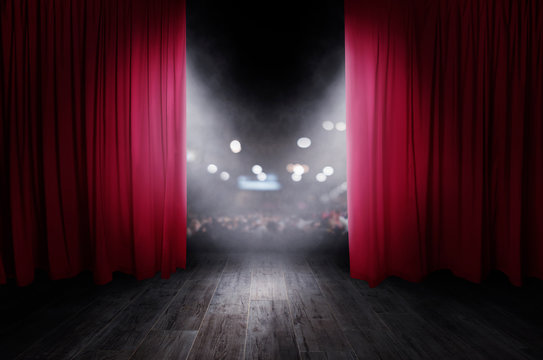
So as the curtain rises this weekend, I’ll be thinking about more than just a middle school musical. I’ll be thinking about the students who found their voice in a song, their confidence in a role, or their purpose behind the scenes. I’ll be thinking about the teachers who stayed late, the parents who volunteered, and the administrators who chose to invest in the arts rather than cut them.
Most of all, I’ll be thinking about my daughter—quietly moving sets in the wings, helping make the magic happen.
Because in a world full of noise, the arts remind us to listen. In a world full of screens, they remind us to see. And in a world full of division, they remind us to connect.
A spoonful of art really does help the world go down a little easier.
A Community Invitation
If you live locally, I hope you’ll come support these students and enjoy an evening of fun, heart, and creativity. Mary Poppins Jr. will be performed at the Ringgold High School Theater at 7:00 PM on both Friday and Saturday. Tickets are just $5—you won’t find a better deal for a night out, and your support means the world to the students of RMS.
References:
U.S. Department of Education, & National Endowment for the Arts. (2024). School Pulse Panel: Arts education in U.S. public schools. Institute of Education Sciences. https://ies.ed.gov/schoolsurvey
Georgia Department of Education. (2024). Georgia Insights: Arts education data dashboards. https://uinsights.gadoe.org
National Association for Music Education. (2023). Arts education funding: A two‑year national snapshot. https://nafme.org/advocacy
 The Quiet Middle