Surviving cancer, losing a friend, and learning to live with the questions.
I still remember the day my best friend called with the news. He had chronic myeloid leukemia—CML, the doctors said. But they also said it was treatable. Manageable. The kind of cancer you could live with. We clung to that word: treatable. It felt like a promise.
He passed away in 2014. He was 30. I still remember the funeral—how surreal it felt to say goodbye to someone who had so much life left to live. He had been diagnosed a few years earlier, and we all believed he’d beat it. CML was supposed to be manageable. The medications were promising. But for reasons no one could explain, they didn’t work for him. His body didn’t respond the way the textbooks said it should.
He would have turned 41 this past January.
I was diagnosed in 2020, at 42. Stage 4A cancer in my head and neck. The tumor was buried deep at the base of my mouth. The doctor didn’t sugarcoat it—without surgery, I had six to eight months. Even with treatment, the five-year survival rate was less than 50%.
In three months, I’ll reach that five-year mark.
I think about him often. About how our stories diverged. About how I’m still here, and he’s not. And I wonder—not with bitterness, but with reverence—why?
I’ve felt tremendous survivor’s guilt.
Why did God spare me, while taking him? Why am I still here, when others—good people, young people, people with families—are not?
After Danny was diagnosed, we all fought so hard. His medications were staggeringly expensive, and I remember reaching out to a CML foundation, desperate to find help. I ran a Facebook page to keep people updated on his journey. Every post was a prayer in disguise—hope wrapped in words.
On August 25, 2014, I was at his bedside when he took his last breath.
Two years later, almost to the day, my youngest daughter Caroline was born. August 26, 2016. Life arriving in the shadow of death. A reminder that grief and joy often share the same space.
I did a lot for Danny, though I never saw it that way. I would have traded places with him in a heartbeat. After he passed, my wife and I tried to be there for Cassie—his wife, our best friend—and their two boys. His youngest was just eight months old. His oldest, Cade, was six. I’ve tried to be a steady presence in Cade’s life over the years. We even went to a Dave Matthews Band concert together recently. He’s seventeen now. I still see Danny in his eyes.
When I was diagnosed in 2020, the roles reversed. I was the one in need. And God showed up—not in a miracle cure, but in people. Friends mowed our lawn, fixed things around the house, cleaned, donated money. Cancer is expensive, even with insurance. But love showed up in practical ways. In casseroles and yardwork. In prayers and presence.
I was released from the hospital on August 6, 2020. My wife and daughters stayed with Cassie and the boys for a few months while I recovered. That’s the kind of bond we had. Still have.
Cassie remarried in 2021. I was the best man in her and Danny’s wedding. Now, her husband Jared is one of my closest friends. Life is strange like that—grief doesn’t erase love; it reshapes it.
Danny’s life continues to shape mine. In how I show up. In how I listen. In how I love.
I still ask God why.
Why did Danny die at 30, with two boys who needed their dad? Why did the medicine fail him, when it was supposed to work? Why did I survive, when the odds were stacked against me?
I don’t have answers. I’ve stopped pretending I ever will.
But I’ve learned that faith after the fire doesn’t mean never asking the questions. It means asking them anyway—through tears, through silence, through clenched fists—and still choosing to believe that God is near.
I used to think faith was about certainty. Now I think it’s about presence. God didn’t explain Danny’s death to me. But He sat with me in the grief. He didn’t promise I’d survive. But He sent people to carry me when I couldn’t walk on my own.
Faith after the fire is quieter. Less about declarations, more about endurance. It’s the kind of faith that shows up in hospital rooms and funeral homes. In the way Cade still laughs like his dad. In the way that Haddon is now starting to look exactly like his brother and dad. In the way Caroline was born two years after we said goodbye. In the way love keeps showing up, even when the story doesn’t go the way we prayed it would.
I don’t know why God spares some and not others. But I do know this: every breath is a gift. And I want to spend mine loving well, grieving honestly, and living in a way that honors the ones who didn’t get the chance.
Danny’s story didn’t end when he died. It lives on in me. And maybe, in you too.
If you’ve lost someone, if you’ve faced the fire and wondered why you’re still standing—this is for you. Not to give you answers. But to remind you that your questions are holy. That your survival is not a mistake. And that even in the ashes, faith can rise.
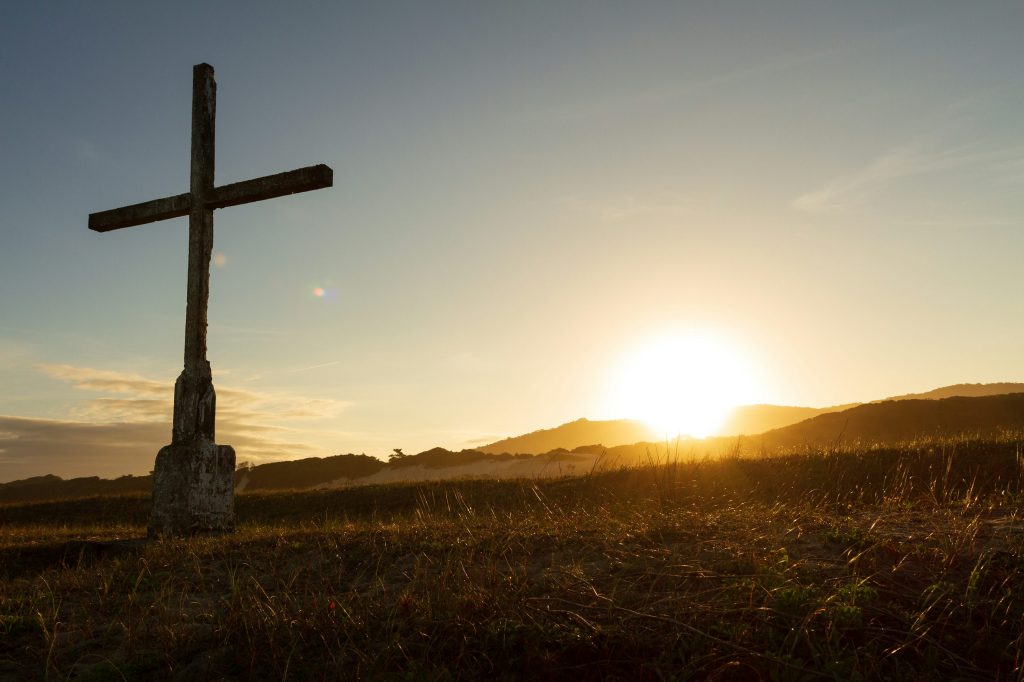
 The Quiet Middle