Turning Sorrow Into Solidarity

Grief is not something we schedule. It doesn’t wait until we are ready, until our hearts are steady, until we’ve had time to recover from the last loss. It arrives unannounced, sometimes again and again, until it feels like the hits keep coming.

On Friday, a student at our school passed away. I didn’t know him personally, but he was part of our community, an athlete, a part of the flow of our days. And now, he is gone.

It feels overwhelming. Just the day before, I had written about grief for two others. Then, suddenly, another loss—closer, heavier, harder to process. I am sad for him. I am sad for his family. I am sad for the friends who now carry memories that will never be added to. I am sad that he may have felt like he had no one to turn to, no one to talk to.

When grief keeps hitting, it can feel like the ground beneath us is shifting. We wonder how much more we can take, how many more losses we can bear. But maybe the way forward is not to try to carry it alone.

The only way forward is together. We lean on each other, knowing that even the smallest gestures—a smile in the hallway, a kind word, or a simple “I’m here”—can remind someone that they are not alone. In moments like these, presence matters more than perfection. We also allow ourselves to grieve because even if we didn’t know the person closely, their absence still leaves a mark on our community. Their life mattered, and recognizing that truth honors both them and the people who loved them.

We honor the lives lost by remembering them, speaking their names, and carrying compassion in their memory. To honor someone means keeping their story alive, even in small ways, and letting their impact spread beyond the moment of grief. Throughout it all, we choose hope—not because it erases the pain, but because it gives us the strength to continue. Hope helps us believe that tomorrow can be brighter, that healing is possible, and that no one should ever feel invisible. And we remember that God gives us power, as my pastor reminded us yesterday. God can help us get through even the hardest weeks. Faith doesn’t take away the sorrow, but it gives us the courage to keep moving forward.

At the same time, seeking help is not something to be ashamed of. Mental health is not bad—it is part of being human. Seeing a counselor is a wonderful thing. Medications are also a good thing; I take medicine for anxiety myself, and I know it helps. Asking for help is a sign of strength, not weakness.

Finally, we must look out for one another. If you see or hear something, say something. Sometimes the smallest act of speaking up can save a life.

Grief teaches us that every life matters, and every absence reshapes the community it touches. When the hits keep coming, the only way through is together—by holding space for sorrow, offering compassion, and reminding each other that no one should feel invisible.

We cannot undo what has happened. But we can choose to make life feel less lonely. Perhaps that is how we get through a week that hurts—by turning sorrow into solidarity, by remembering that even strangers deserve our grief, our respect, and our care, and by choosing to walk forward together, even when the path feels heavy.

If you have been blessed with a son or daughter, take time to tell them how much you love them and how proud you are of them. Each evening, ask about their day and give them the chance to truly talk, to share what’s on their mind, and to ask questions. And don’t forget the hugs—lots of them.

But this call is not only for parents. It is for all of us. Every person has someone they can encourage, someone they can check in on, someone who needs to be reminded they are seen and valued. A kind word to a friend, a text to a colleague, a smile to a stranger—these small acts can make a difference.

Love is not limited to family ties; it is a gift we can extend to anyone.
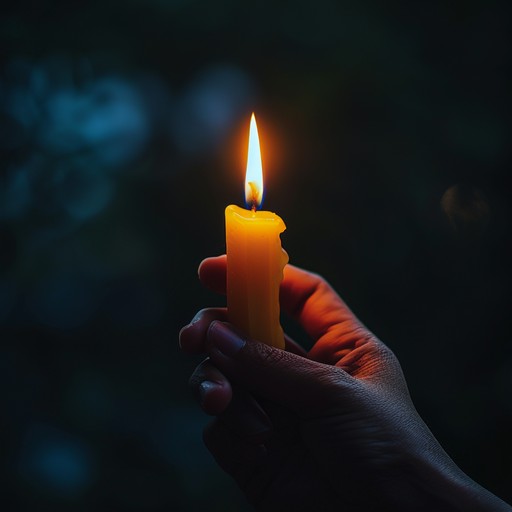
The Invisible Weight

Some mornings, the heaviness shows up before your feet even find the floor. 

It’s not loud. It doesn’t shout. It just settles in beside you, quiet and familiar—like a shadow that doesn’t need to explain itself.

That’s how I’ve felt these past few days. Not overwhelmed. Not panicked. Just… off. Like the soul knows something the rest of me hasn’t caught up to yet.

Yesterday, I got a text from a friend—not someone I’ve met in person, but someone whose story echoes my own. We share the same battle scar: oral cancer. Her journey came first, and mine followed. We were both cared for by the same surgeon, Dr. Kaka—a man with kind eyes and steady hands. He walked us both through fire.

She told me that her latest scan back in April showed a small nodule on her lung. Probably nothing. These things come and go. But still—there it was. That word, nodule, has a way of pressing down on you, even when you know better. I’ve been in that place, too. They found something on my own lung once. It disappeared by the next scan—but not before it quietly rearranged the furniture in my chest.

As I was sitting with that concern, I heard more news—of a woman I once knew from church. Someone who worshiped with us when my best friend, Danny, was pastor. She and her husband eventually moved to South Georgia. They were still on my social feed. We weren’t close, but we were connected—by Sundays, by a meal, by a dozen shared handshakes across time. Yesterday, she lost her life in a car accident. She was 37. A wife. A mother of four kids. Her family had just returned from a mission trip to Honduras.

There’s no good way to hold that kind of loss. No words that feel big enough.

So no, I can’t point to a single thing making this week feel heavy. But the weight is there.

It’s grief. It’s worry. It’s that strange ache that comes from carrying the sorrows of others in your spirit—even when those sorrows aren’t technically yours.

Sometimes grief doesn’t come barreling in. It tiptoes. Layered. Stacked quietly beneath everyday things. You make breakfast. You answer emails. You check the weather. And all the while, you’re carrying the ache of news you didn’t expect, of people you loved in ways that don’t always make sense on paper.

Mental health isn’t always about a crisis. Sometimes it’s just the quiet cost of caring. The emotional hangover that comes from loving people so deeply that their pain leaves an imprint on your day. Even when your scan is clear, it doesn’t mean the fear is gone. Even when the tragedy didn’t land at your door, your spirit still flinches when it hears it knock.

It’s the weight of waiting. Of uncertainty. Of bearing witness to a world that breaks, sometimes beautifully, sometimes cruelly.

If you’ve been feeling this too—if the world feels louder than usual, heavier in your chest—you’re not broken. You’re not “too sensitive.” You’re human. And that humanity is holy.

Today, I’m holding space for my friend. I’m holding space for that family. I’m holding space for the ache that doesn’t need to be justified to be real. And if your heart feels stretched, too—just know: you’re not the only one.

We don’t always need answers. But we do need each other.

If this resonates, I’d be honored if you left a note. We’re all carrying something.

What It Means to Speak Truth With Civility

Tuesday, June 17, 2025

This was originally posted on Facebook and later added to my blog.

I’m not someone who yells to make a point. I don’t see the value in shaming people into agreement. But I do believe in being honest about what I see—especially when it feels like the noise around us is drowning out the truth.

I live in Northwest Georgia. A lot of folks around here support Donald Trump. I know and love many of them. And still, I feel deeply troubled by what the Trump era has done to our country—the constant us-versus-them tone, the erosion of empathy, the vilifying of anyone who dares to disagree.

That kind of rhetoric doesn’t just stay in Washington or on cable news; it appears in school board meetings, county politics, and how we communicate with each other in the grocery store, in the comments section of a Facebook post, and certainly on social media—where people frequently express things they’d never say face-to-face. I’ve seen longtime friends clash online like adversaries. There’s something about being behind a screen that seems to strip away empathy, and that matters. When the volume of our politics increases, the volume of our humanity often decreases.


I’ve had a front-row seat to what really matters in life. In 2020, I was diagnosed with an aggressive form of cancer. I was told I might have just eight months to live without surgery. Everything changed. I lost my lower lip and jaw. I still can’t eat by mouth. But I’m here. And I’ve learned that when you’re facing something that raw and real, politics don’t matter the way they once did. What matters is who shows up. Who brings peace into the room instead of more fire.

That experience gave me a clarity I didn’t expect. I don’t have time for hate, and I’m not interested in pretending that silence equals peace either. You can speak up without tearing others down. You can stand for something without shouting over everyone else in the room.

Civility isn’t weakness. It’s being steady when the world wants you to scream. It’s listening for the sake of understanding, not just to reload your argument. It’s choosing to believe that dignity still belongs in public conversation—even if fewer people seem to practice it.

This is the world I want my daughters to grow up in. It’s the kind of classroom I hope to lead soon, as I finish my degree and begin student teaching. I want my students to know: you don’t have to agree with everyone. However, you must respect that their story is just as sacred as yours.

That’s why I’m writing. Not because I think I’ve got it all figured out. But because I still believe that calm voices can carry. And maybe, just maybe, help others feel brave enough to speak truth with kindness too.

Take Care, 

Matt