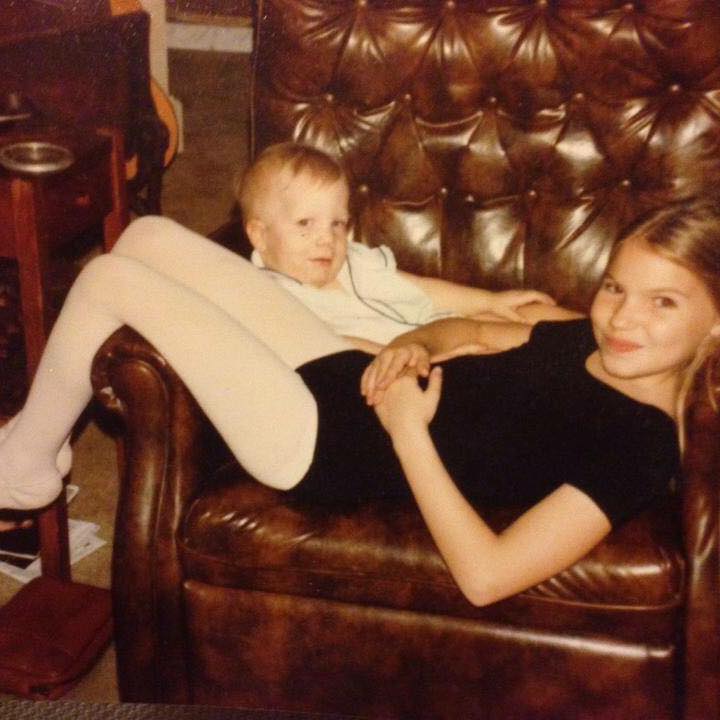
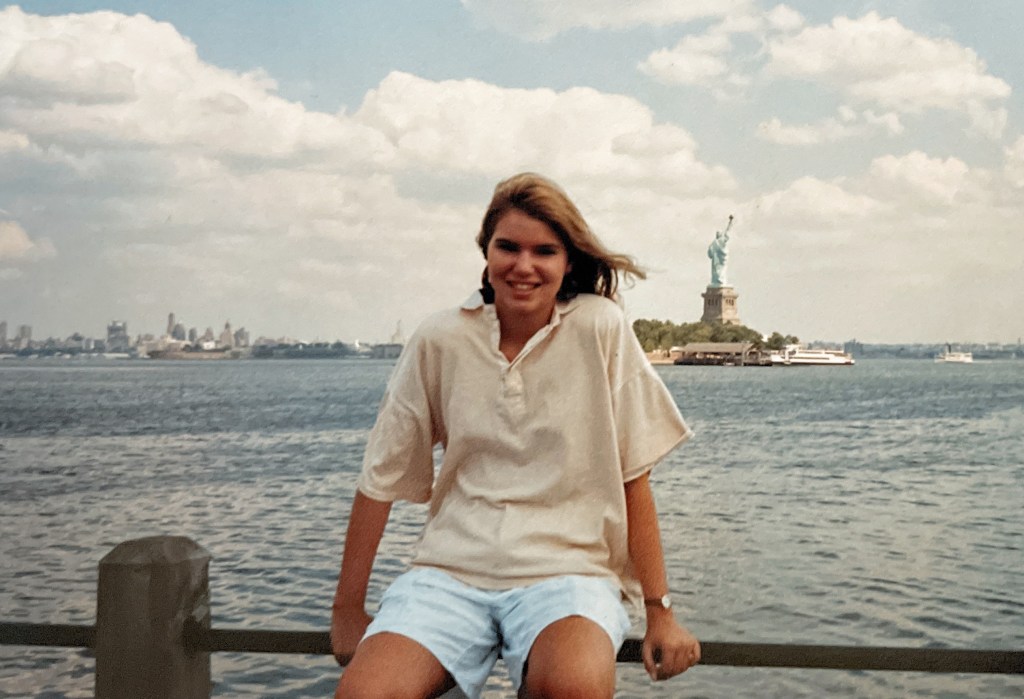
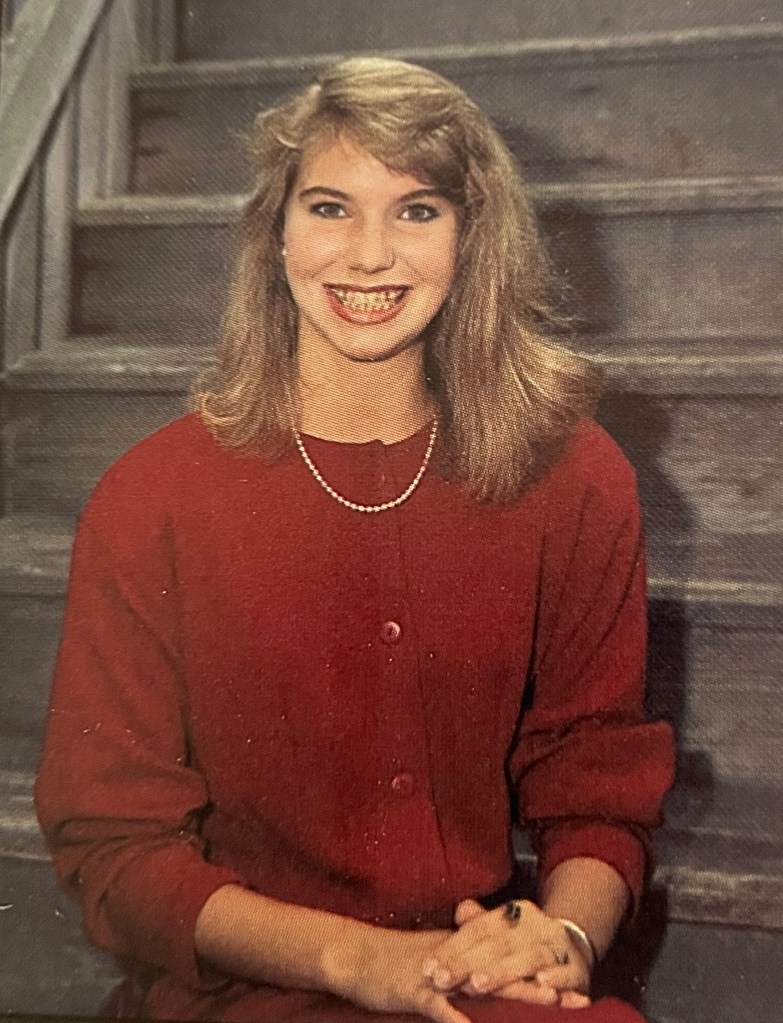
Today would have been my older sister Julie’s 54th birthday. Tragically, we lost her the night before Thanksgiving in 1989, just one day after her 18th birthday. I was 11 years old, in 5th grade, and my younger sister was only 7. That year, Thanksgiving fell on November 23rd, and instead of celebrating, we found ourselves grieving a loss that changed our family forever.
I remember that Wednesday night vividly. I was staying at my grandparents’ house, just a few miles down Sandfort Road from our own home. Their house was the old family home, with parts more than a century old. The property had once held a little store and a cotton gin, surrounded by fields where my grandfather planted cotton and soybeans before later converting them to pine trees. Those fields were where he taught me to drive at the age of nine. That house was more than a home—it was a place where generations had lived, worked, and gathered. I spent countless weekends and summer nights there, always choosing to sleep on the sofa in the den, a space converted from a covered porch.
That Wednesday afternoon, I helped my grandmother prepare dishes we would carry to Thanksgiving dinner the next day. But late that night, she woke me from the sofa, upset, and told me we needed to go back home. When we arrived, my mother embraced me tightly and told me Julie had been in an accident. From that moment, everything became a whirlwind.
The next day, Thanksgiving, people poured into our home to offer condolences. My grandfather, a county commissioner, seemed to know half the county, and their presence was both overwhelming and comforting. I remember sitting at the piano, playing “We Three Kings” over and over, trying to distract myself from the grief that hung in the air.
Julie was beautiful inside and out. She had just begun her freshman year at Auburn University a couple of months earlier and had pledged Phi Mu. She was full of promise, and losing her at such a young age was devastating. Yet even in that loss, I knew one thing: if I ever had a daughter, I would name her Julie, to honor my sister. Years later, when our first child was born, we chose her name without hesitation. Today, my daughter Julie—and her younger sister Caroline—bring joy and light into our lives, carrying forward the love that my sister embodied.
I often wonder what Julie would have become. She had modeled during her teenage years, and her future seemed wide open. I wonder what she would think of her namesake, and of Caroline too. One of my earliest memories of her is a family trip to Disney World when I was about four years old, before my younger sister was born. Epcot was still being built then, and Julie’s smiles made the trip great. She was always smiling. Perhaps that is the biggest thing I remember about her, her smiles.
Though Julie has been gone for 36 years, her memory is woven into the fabric of my life—through the fields where my grandfather taught me, the meals prepared with my grandmother, the piano keys I pressed to cope with grief, and most of all, through the joy of my daughters. Julie is terribly missed, but her legacy lives on in the love we continue to share.
Grief is not something we schedule. It doesn’t wait until we are ready, until our hearts are steady, until we’ve had time to recover from the last loss. It arrives unannounced, sometimes again and again, until it feels like the hits keep coming.
On Friday, a student at our school passed away. I didn’t know him personally, but he was part of our community, an athlete, a part of the flow of our days. And now, he is gone.
It feels overwhelming. Just the day before, I had written about grief for two others. Then, suddenly, another loss—closer, heavier, harder to process. I am sad for him. I am sad for his family. I am sad for the friends who now carry memories that will never be added to. I am sad that he may have felt like he had no one to turn to, no one to talk to.
When grief keeps hitting, it can feel like the ground beneath us is shifting. We wonder how much more we can take, how many more losses we can bear. But maybe the way forward is not to try to carry it alone.
The only way forward is together. We lean on each other, knowing that even the smallest gestures—a smile in the hallway, a kind word, or a simple “I’m here”—can remind someone that they are not alone. In moments like these, presence matters more than perfection. We also allow ourselves to grieve because even if we didn’t know the person closely, their absence still leaves a mark on our community. Their life mattered, and recognizing that truth honors both them and the people who loved them.
We honor the lives lost by remembering them, speaking their names, and carrying compassion in their memory. To honor someone means keeping their story alive, even in small ways, and letting their impact spread beyond the moment of grief. Throughout it all, we choose hope—not because it erases the pain, but because it gives us the strength to continue. Hope helps us believe that tomorrow can be brighter, that healing is possible, and that no one should ever feel invisible. And we remember that God gives us power, as my pastor reminded us yesterday. God can help us get through even the hardest weeks. Faith doesn’t take away the sorrow, but it gives us the courage to keep moving forward.
At the same time, seeking help is not something to be ashamed of. Mental health is not bad—it is part of being human. Seeing a counselor is a wonderful thing. Medications are also a good thing; I take medicine for anxiety myself, and I know it helps. Asking for help is a sign of strength, not weakness.
Finally, we must look out for one another. If you see or hear something, say something. Sometimes the smallest act of speaking up can save a life.
Grief teaches us that every life matters, and every absence reshapes the community it touches. When the hits keep coming, the only way through is together—by holding space for sorrow, offering compassion, and reminding each other that no one should feel invisible.
We cannot undo what has happened. But we can choose to make life feel less lonely. Perhaps that is how we get through a week that hurts—by turning sorrow into solidarity, by remembering that even strangers deserve our grief, our respect, and our care, and by choosing to walk forward together, even when the path feels heavy.
If you have been blessed with a son or daughter, take time to tell them how much you love them and how proud you are of them. Each evening, ask about their day and give them the chance to truly talk, to share what’s on their mind, and to ask questions. And don’t forget the hugs—lots of them.
But this call is not only for parents. It is for all of us. Every person has someone they can encourage, someone they can check in on, someone who needs to be reminded they are seen and valued. A kind word to a friend, a text to a colleague, a smile to a stranger—these small acts can make a difference.
Love is not limited to family ties; it is a gift we can extend to anyone.
This week, life reminded me how fragile and unfair it can be.
On Tuesday, I received word that the registrar at the middle school where I used to substitute had passed away. It was a shock. I didn’t know her well, but I remember her kindness — helping me get into classrooms, always with a calm presence. She was a beloved member of a tight-knit faculty and staff. I knew her daughter too — she was in 8th grade last year. My heart aches for her.
Then yesterday, I learned that another woman had passed away. Her name was Kim. I never got the chance to meet her, but I know her in-laws — they go to our church. Good, gracious people. I know Kim had twin daughters. They went to Camp Kesem with my girls the summer before last — a camp for children whose parents have cancer. They even shared a cabin with Julie. Kim fought hard, but cancer got the best of her.
So here we are. One girl lost her mother suddenly. Two more lost their mother to a disease that takes too much. And I’m left asking the same question I’ve asked before: Why do bad things happen to such good people?
It’s a life question. One we’ll never fully understand — at least not on this side of heaven.
But maybe part of the answer is in how we respond. In how we show up. In how we listen, pray, and offer what we can — even if it’s just a meal, a hug, or a quiet moment of presence.
I don’t have answers.
But I do believe in showing up — in small kindnesses, in shared stories, in listening when someone needs to talk. I believe in the power of presence, even when words fall short. I believe that grief doesn’t follow a script, and neither does healing.
Sometimes, all we can do is stand beside those who are hurting and say, “I see you. I’m here.” Sometimes, all we can offer is a meal, a memory, or a moment of stillness. And sometimes, that’s enough.
Life doesn’t always make sense. Loss doesn’t play fair. But love — love shows up anyway. In casseroles and camp cabins. In church pews and classroom doors. In the quiet resolve of those who keep going, even when their hearts are broken.
So I’ll keep telling stories. I’ll keep listening. I’ll keep showing up — because that’s what we do for each other, on this side of heaven.
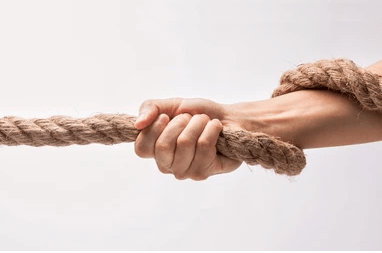
I keep thinking about the rope. The one the girls at Camp Mystic held onto as the river rose around them. A simple rope—meant to guide them across a footbridge—became, in their final moments, a lifeline. A prayer. A thread between this world and the next.
In two weeks, my daughters—ages 12 and 8—will head off to Camp Kesem, held this year at Camp Pisgah near Brevard, North Carolina. It’s a camp for children who’ve had a parent with cancer. A place of healing, laughter, and belonging. Their counselors are college students from the Western Carolina University chapter—young people who give up part of their summer to create joy for kids who’ve known too much sorrow too soon. I’m grateful for it. And I’m uneasy.
Because the girls lost in Texas were the same age as mine. Because last fall, the mountains near Brevard were battered by Hurricane Helene. Because I know, too well, that life doesn’t always give warnings.
I’ve read the headlines. I’ve seen the photos of the Guadalupe River swollen and angry, of parents waiting for news no parent should ever have to hear. I’ve read about the counselors who sang hymns and held hands as the floodwaters came. And I’ve sat with the weight of it all—because it’s impossible not to imagine my daughters in their place.
How could this happen? Why them?
These are the questions that echo in the silence after tragedy. They don’t come with answers. But they come with weight. And maybe, in writing, I’m trying to carry a small piece of that weight with the families who now face a world forever changed.
There’s a kind of sacredness in summer camps. They’re places where kids become a little more themselves—where they sing off-key, stay up too late, and find courage in the dark. Camp is supposed to be safe. It’s supposed to be joy.
And yet, even there, the world breaks in.
I don’t know what to do with that. But I do know this: when I pack my daughters’ bags this year, I’ll do it with a heart full of prayer. I’ll trust the counselors. I’ll trust the weather. I’ll trust the rope.
Because parenting is, in the end, an act of letting go. And faith—real faith—is holding on to love even when the waters rise.
If you feel moved to help in the wake of this tragedy, please give thoughtfully. Sadly, in times of grief, some take advantage of others’ generosity. Be sure to donate through trusted organizations. The American Red Cross has opened shelters and reunification centers in the affected areas, and the Kerr County Flood Relief Fund is providing direct support to families impacted by the flooding.
In 2020, I was diagnosed with head and neck cancer. What followed was a season marked by pain, distance, and uncertainty—not just for me, but for my wife and our two young daughters. I’ve written about parts of that journey before, but this reflection is different. It’s about what cancer took from me—and what, in its own strange way, it gave back. It’s about fatherhood reshaped by illness, about presence reclaimed through healing, and about the quiet power of showing up. This is a story told through the lens of a calendar—one that once marked surgeries and separation, and now holds birthdays, field trips, and the ordinary days I once feared I’d miss.
The Calendar
It’s a Tuesday morning in May. The kitchen hums with the gentle chaos of routine—Caroline hums to herself as she ties her shoes, and Julie is at the fridge, double-checking her lunch that she takes to school every day. She asks me, “You don’t have anything this week, right?” she asks, not looking up.
I tell her no, just a regular week. She nods, but I can see the tension in her shoulders ease just slightly.
Almost five years later, she still checks. Still worries. Still remembers.
The calendar used to be a battlefield. In 2020, it was filled with dates I couldn’t control—diagnosis, surgery, ICU, radiation. Days I missed birthdays. Days I couldn’t speak. Days I wasn’t there. Now, it’s filled with spelling tests, school holidays, and homework. I follow the same calendar as my daughters do. That wasn’t always the case.
There was a time when I couldn’t be their father in the way I wanted to be. Cancer took that from me. But slowly—through pain, through distance, through healing—it gave something back. Not the same life, but a different one. A quieter one. One where I help with homework and go on field trips. One where I’m not just surviving but really showing up.
School let out on May 23rd. Now, July stretches ahead of us—no appointments, no alarms, no separation. Just time. Time to be together. Time I once wasn’t sure I’d have.
But this week, the house is quiet. The girls are in Columbus, visiting my mom—the same house where I once lay recovering, too weak to speak, too far from the life I knew. Back then, they were the ones far away. Now, they’re there by choice, laughing in the same rooms that once held my silence.
We’ll see them again next weekend. And when we do, I’ll mark it on the calendar—not because I might forget, but because I want to remember. Every visit, every return, every ordinary day we get to share.
The Diagnosis
May 2020 was already strange. The world had shut down, schools were closed, and routines had unraveled. But inside our house, something even more disorienting was happening. I was in pain—deep, unrelenting pain that wrapped around my jaw and neck like a vice. I was tired all the time, sleeping more than I was awake. The girls—Julie, seven, and Caroline, three—tiptoed around me, unsure why Daddy was always lying down, why he winced when he tried to talk.
I tried to keep things normal. I still made jokes when I could. I still tucked them in. But the truth was, I was slipping away from the life I knew, and I didn’t know how to stop it.
By July 7th, I couldn’t work anymore. The pain had taken over. I circled the date on the calendar—my last day at work—and stared at it like it belonged to someone else. A week later, I had my first appointment at Emory. Two weeks after that, I was in the ICU.
I’ve told parts of this story before. But each time I return to it, I see something new—not just in what happened, but in who I was becoming.
The calendar filled up fast. July 27th: admitted to the hospital. July 29th: surgery. July 31st: feeding tube. August 6th: discharged. Each date was a milestone, but none of them felt like progress. They felt like surrender.
Because of COVID, I was alone. My wife and mom stayed in a hotel nearby, but they couldn’t come into the hospital. My daughters were hundreds of miles away, staying with their grandparents. I missed Caroline’s fourth birthday. I missed bedtime stories and backyard games. I missed being their dad.
I remember the blood transfusion. I remember the silence of the ICU. I remember the way the days blurred together, how the calendar on the wall in my hospital room never seemed to move. I was stuck in time, while my daughters kept growing without me.
The Separation
August 6th, 2020. I was discharged from the hospital and sent to my mom’s house in Columbus to recover. My wife and daughters returned to North Georgia. We were all where we needed to be—but not where we wanted to be.
That stretch of time—August to November—was the longest I’d ever been away from my girls. They came down some weekends, but the visits were brief, and the goodbyes were always harder than the hellos. Caroline had just turned four. Julie would turn eight in November. I missed the in-between—the ordinary days that make up a childhood.
I stayed in the guest room at my mom’s house, surrounded by quiet and care. She and my sister made sure I had everything I needed—meals, medicine, encouragement. They watched over me when I couldn’t watch over myself. I’ll never forget that. Their strength held me up when mine was gone.
Still, the days moved slowly. I’d mark the weekends the girls were coming, then count down to them one by one. The calendar became a lifeline—a way to hold onto hope, to remind myself that I was still a father, even from a distance.
COVID made everything harder. No one could visit me in the hospital. No one could sit beside me during radiation. Even when I was out, I couldn’t hold my daughters the way I wanted to. I was fragile. I was healing. I was still learning how to eat again.
And yet, they waited for me. They asked about me. Julie, especially, carried the weight. She was old enough to understand that something was wrong, but too young to make sense of it. Even now, almost five years later, she still asks if I have any appointments. Still watches the calendar for signs of worry.
That fall, while I was in Columbus, the world kept moving. Leaves changed. School started—though not in the usual way. My daughters grew. And I healed, slowly, in the quiet. I missed so much. But I also began to understand what it meant to return—not just to health, but to them.
What Cancer Took
Cancer took more than my health. It took my voice—literally, for a time—and with it, the ease of conversation, the ability to read bedtime stories, to sing in the car, to say “I love you” without effort. It took my appetite, my strength, my ability to eat without a feeding tube. It took my sense of normalcy, my sense of control.
It interrupted my work. I had been at the same job since 2006, and I had to step away in July 2020, unsure if I’d ever return. I was out for five months, and during that time, I didn’t know if I’d be able to go back at all. But I did—slowly, in December. I stayed until February 2023. Still, that stretch of absence felt like a lifetime. The rhythm of work, the identity it gave me, the stability it offered—cancer shook all of it.
But perhaps the hardest thing it took was presence.
I wasn’t there when Caroline turned four. I wasn’t there for the start of school, or for the little moments that make up a day—helping with homework, brushing hair, hearing about a dream right before bed. I wasn’t there to reassure Julie when she was scared. I wasn’t there to hold my wife’s hand when she needed someone to lean on.
It took time. Time I’ll never get back. Time I spent in hospital beds and waiting rooms, in silence and in pain.
It took certainty. Even now, years later, there’s a shadow that follows every checkup, every scan. Julie still asks if I have appointments. She still watches the calendar like it might betray her.
It took simplicity. Things that used to be automatic—eating, speaking, swallowing—became complicated. I had to learn how to live in a body that no longer worked the way it used to.
And it took a version of fatherhood I had imagined for myself—the one where I was always strong, always present, always able to protect.
But in the space left behind, something else began to grow.
What It Gave Back
Cancer stripped away so much—but in its wake, it left space for something else to take root.
It gave me clarity. When everything was uncertain—when I couldn’t eat, couldn’t speak, couldn’t be with my daughters—I realized what mattered most. Not titles. Not routines. But time. Connection. The chance to simply be with the people I love.
It gave me softness. I’ve always been a laid-back father, slow to anger, quick to laugh. But after cancer, I became even more tender. More patient. More aware of how fragile and sacred each moment is. I don’t rush through bedtime anymore. I don’t take silence for granted. I don’t assume there will always be a next time.
It gave me a new path. In 2023, I left the job I’d held for nearly 17 years. I didn’t walk away from work—I walked toward something. I became a paraprofessional at Julie’s elementary school. I was there when she was in third grade, and Caroline was just next door in second. I followed their calendar. I walked the same halls. I saw them at lunch. I was present in a way I never had been before.
It gave me purpose. I started working with students. I saw myself in them—their questions, their fears, their resilience. I went back to school to earn my Master’s in Secondary Education. I began to imagine a future not just for myself, but for the students I might one day teach. A future where my story—my scars—might help someone else feel seen.
It gave me time. Not just more of it, but a new relationship to it. I no longer measure time in deadlines or appointments. I measure it in field trips, in lunchbox notes, in the way Julie still checks the calendar and Caroline still hums in the mornings.
It didn’t give me back the life I had. But it gave me a life I cherish—one built not on certainty, but on presence.
Fatherhood Reimagined
Before cancer, I thought being a good father meant being strong, steady, unshakable. I thought it meant shielding my daughters from pain, from fear, from the messiness of life. But cancer changed that. It showed me that strength isn’t about being unbreakable—it’s about being honest, being present, being willing to show up even when you’re scared.
Julie was old enough to feel the shift. She saw the hospital bags, the weight loss, the silence. She felt the distance. And even now, she carries some of that with her. She watches the calendar. She asks about appointments. She worries more than a child should have to. But she also hugs tighter. She listens more closely. She sings constantly—her voice filling the house with a kind of hope I didn’t know I needed. She knows what it means to care deeply.
Caroline was younger, but she felt it too. She remembers the feeding tube. She remembers the weekends in Columbus. She remembers missing me. And now, she doesn’t take time for granted. She doesn’t sing like her sister, but she laughs—especially when she’s being tickled. Her laughter is full-bodied, contagious, the kind that makes you forget everything else. That joy, that lightness, is its own kind of healing.
I’ve learned that fatherhood isn’t about always having the answers. It’s about being willing to sit with the questions. It’s about letting your children see you as human—hurting, healing, hoping. It’s about showing them that love doesn’t disappear when things fall apart. It holds on. It adapts. It grows.
For a while, I worked at their schools. I was there when Julie was in third and fourth grade, and Caroline was just next door in second. I followed their calendar. I walked the same halls. I saw them at lunch. I was part of their world in a way I never had been before.
That season ended in May 2024. This past school year, I was a substitute teacher at the middle school—Julie’s future school. This fall, she’ll start sixth grade there, and Caroline will begin fourth. I’ll be student teaching, though I don’t yet know where. I may not be at their school anymore. But what I’ve learned—what cancer taught me—is that presence isn’t always about proximity. It’s about intention. It’s about showing up, wherever you are.
Closing Reflection
The calendar still hangs in our kitchen. It’s no longer filled with appointments and procedures. Now it holds birthdays, school breaks, and the occasional field trip. But every time I look at it, I remember the years when time felt like an enemy. Now, it feels like a gift.
The road home wasn’t straight. It was marked by detours, delays, and days I thought I wouldn’t make it. But I did. And I’m still walking it—one day, one page, one moment at a time.
The calendar in our kitchen still reserves space for everyday events—school breaks, birthdays, pediatrician appointments. But when I look at it, I see more than just dates. I see the story it tells. The empty spaces where I once disappeared. The circles marking the girls’ visits to Columbus. The slow return of color, rhythm, and life.
I used to fear the calendar. Now, I’m grateful for it. Not because it promises certainty, but because it reminds me of what I’ve lived through—and what I’ve come back to.
I don’t know where I’ll be placed for student teaching this fall. I don’t know if I’ll be in the same building as Julie, or anywhere near Caroline. But I do know this: I’ll show up. I’ll keep showing up. Because that’s what fatherhood has become for me—not perfection, not protection, but presence.
Cancer took a lot. But it gave me something, too. It gave me a deeper understanding of love. Of time. Of what it means to be a father who listens, who laughs, who lingers a little longer at bedtime.
Julie still checks the calendar. Caroline still bursts into laughter when I tickle her. And I still mark the days—not to count what’s coming, but to honor what’s here.
Some mornings, the heaviness shows up before your feet even find the floor.
It’s not loud. It doesn’t shout. It just settles in beside you, quiet and familiar—like a shadow that doesn’t need to explain itself.
That’s how I’ve felt these past few days. Not overwhelmed. Not panicked. Just… off. Like the soul knows something the rest of me hasn’t caught up to yet.
Yesterday, I got a text from a friend—not someone I’ve met in person, but someone whose story echoes my own. We share the same battle scar: oral cancer. Her journey came first, and mine followed. We were both cared for by the same surgeon, Dr. Kaka—a man with kind eyes and steady hands. He walked us both through fire.
She told me that her latest scan back in April showed a small nodule on her lung. Probably nothing. These things come and go. But still—there it was. That word, nodule, has a way of pressing down on you, even when you know better. I’ve been in that place, too. They found something on my own lung once. It disappeared by the next scan—but not before it quietly rearranged the furniture in my chest.
As I was sitting with that concern, I heard more news—of a woman I once knew from church. Someone who worshiped with us when my best friend, Danny, was pastor. She and her husband eventually moved to South Georgia. They were still on my social feed. We weren’t close, but we were connected—by Sundays, by a meal, by a dozen shared handshakes across time. Yesterday, she lost her life in a car accident. She was 37. A wife. A mother of four kids. Her family had just returned from a mission trip to Honduras.
There’s no good way to hold that kind of loss. No words that feel big enough.
So no, I can’t point to a single thing making this week feel heavy. But the weight is there.
It’s grief. It’s worry. It’s that strange ache that comes from carrying the sorrows of others in your spirit—even when those sorrows aren’t technically yours.
Sometimes grief doesn’t come barreling in. It tiptoes. Layered. Stacked quietly beneath everyday things. You make breakfast. You answer emails. You check the weather. And all the while, you’re carrying the ache of news you didn’t expect, of people you loved in ways that don’t always make sense on paper.
Mental health isn’t always about a crisis. Sometimes it’s just the quiet cost of caring. The emotional hangover that comes from loving people so deeply that their pain leaves an imprint on your day. Even when your scan is clear, it doesn’t mean the fear is gone. Even when the tragedy didn’t land at your door, your spirit still flinches when it hears it knock.
It’s the weight of waiting. Of uncertainty. Of bearing witness to a world that breaks, sometimes beautifully, sometimes cruelly.
If you’ve been feeling this too—if the world feels louder than usual, heavier in your chest—you’re not broken. You’re not “too sensitive.” You’re human. And that humanity is holy.
Today, I’m holding space for my friend. I’m holding space for that family. I’m holding space for the ache that doesn’t need to be justified to be real. And if your heart feels stretched, too—just know: you’re not the only one.
We don’t always need answers. But we do need each other.
If this resonates, I’d be honored if you left a note. We’re all carrying something.
 The Quiet Middle